Traction Gas Spring
Traction gas springs, also called tension gas springs or pull type gas springs, are designed to provide pulling force rather than pushing force. They are used in special motion control applications where reverse-direction force, compact installation, or controlled pulling assistance is required.
Compared with compression gas springs, traction gas springs are typically selected for pull applications, hinged panels, counterbalance systems, hidden access structures, and other motion layouts where pushing support is not suitable. This page helps explain the product concept, typical applications, technical parameters, installation considerations, and customization options in one place.
-
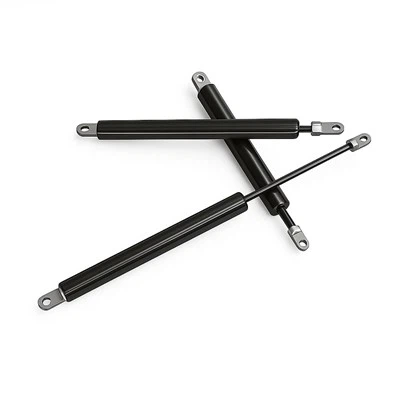
![Adjustable Tension Gas Springs Pull Type]() Adjustable Tension Gas Springs Pull TypeLand's traction gas springs, also called tension gas springs deliver reliable pulling force for demanding applications. These tension gas struts provide smooth extension operation with forces ranging
Adjustable Tension Gas Springs Pull TypeLand's traction gas springs, also called tension gas springs deliver reliable pulling force for demanding applications. These tension gas struts provide smooth extension operation with forces ranging -
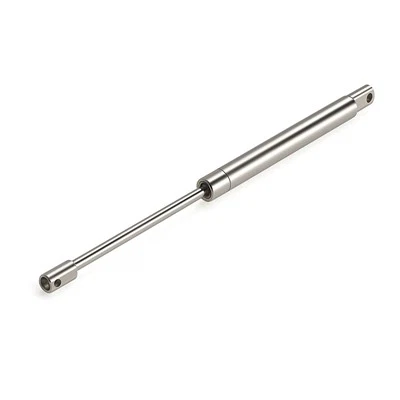
![316 Stainless Tension Gas Springs]() 316 Stainless Tension Gas SpringsLand's 316 stainless steel tension gas springs provide superior corrosion resistance for demanding environments. These heavy-duty traction springs deliver reliable pulling force in marine, chemical,
316 Stainless Tension Gas SpringsLand's 316 stainless steel tension gas springs provide superior corrosion resistance for demanding environments. These heavy-duty traction springs deliver reliable pulling force in marine, chemical,


Why Choose Us
Rich Experience
We had 30+ years of production experience, Annual output of 4 million pieces, product is tested for force, leakage, cycle life, and corrosion resistance to ensure consistent and reliable performance.
Custom Service
We provide tailored gas spring solutions based on your drawings or specifications, including force, stroke, materials, and fittings.
Our Certificate
ROHS, SGS, MSDS, CMRT test reports complying with international certification standards, ASTM-B117 200hours salt spray testing, and 100000 cycles of fatigue life testing passed.
Overview of Traction Gas Spring

Traction gas springs are designed to provide controlled pulling force for applications where a standard push type gas spring cannot match the required motion path. They are commonly used in structures that need reverse-direction assistance, compact installation, or more controlled balance during movement.
In many applications, traction gas springs help improve motion control, reduce abrupt movement, and support better balance in special opening or closing systems. They are often used in pull applications, hinged panels, counterbalance mechanisms, hidden access structures, flaps, covers, and other special motion control designs.
Depending on the application, traction gas springs can be supplied in standard sizes or customized according to force, stroke, length, fittings, and installation geometry. Correct matching is not only about force level, but also about movement direction, leverage change, and available mounting space.

Force Range: 50 N to 4,000 N (≈ 11.2 lbf to 899.2 lbf)
Stroke Lengths: 10 mm to 1000 mm (≈ 0.39″ to 39.37″)
Rod Diameters: 6 mm to 14 mm (≈ 0.24″ to 0.55″)
Tube Diameters: 18 mm to 40 mm (≈ 0.71″ to 1.57″)
Materials: Stainless steel 316, mild steel with optional nickel/zinc plating
Damping & K-Factor Adjustment: For precise motion tuning
Locking Options: Lockable shrouds or cover tubes
Re-pressurizable Valves: Field-adjustable pressure extends lifespan
Temperature Range: –30 °C to +80 °C (–22 °F to +176 °F)
What Is a Traction / Tension Gas Spring
A traction gas spring is a type of gas spring designed to generate pulling force rather than pushing force. It is also commonly called a tension gas spring or pull type gas spring.
Unlike compression gas springs, which extend outward to support lifting and opening, traction gas springs work in the opposite direction. They are used when the application needs controlled pulling assistance, return force, or a more compact movement solution.
This makes traction gas springs suitable for pull applications, hinged panels, counterbalance systems, and special motion control layouts where standard compression gas springs may not be the right fit.

Product Size
|
Size |
Stroke Range |
Force Range |
K-Factor |
Extended Length |
Materials |
|
|
6/18 |
30 – 300 mm |
100-600 N |
1.55 |
2 X Stroke + 85 mm |
Steel / Stainless |
|
|
8/23 |
30 – 400 mm |
200-1000 N |
1.60 |
2 X Stroke + 85 mm |
Steel / Stainless |
|
|
10/28 |
30 – 500 mm |
300-1112 N |
1.60 |
2 X Stroke + 100 mm |
Steel / Stainless |
|
|
14/40 |
50 – 500 mm |
500-3500 N |
1.70 |
2 X Stroke + 100 mm |
Steel / Stainless |
|
Quality & Testing
For traction gas springs used in pull applications, hinged panels, counterbalance systems, and other special motion control structures, stable pulling force and reliable long-term performance are especially important.

At Land Gas Spring, quality control and testing are important parts of both product development and production. Because traction gas springs work differently from standard compression gas springs, correct force behavior, sealing reliability, dimensional accuracy, and cycle performance all play an important role in real application results.
Reliable traction gas spring performance depends not only on design, but also on consistent production control, proper material selection, and practical quality verification during manufacturing.
This helps support more reliable performance in pull applications, hinged panels, hidden access systems, counterbalance structures, and other special motion control designs where stable movement and predictable force behavior are important
Typical Applications
Traction gas springs are commonly used in applications where a pulling force is needed to support motion, improve balance, or control movement more effectively. They are especially useful in special layouts where the structure does not allow a standard compression gas spring to work properly.

Hinged Panels
Traction gas springs can be used in hinged panel systems where the movement path requires pulling assistance instead of pushing support.

Counterbalance Systems
Suitable for counterbalance mechanisms that need smoother return force and better movement balance during operation.

Pull Applications
Used in pull applications where the structure requires controlled closing assistance or reverse-direction support.

Hidden Access Panels
Useful for hidden or internal access systems where limited installation space requires compact motion control.

Covers & Flaps
Applied in covers, flaps, and special lid systems that benefit from controlled pulling force and improved movement stability.

Industrial Motion Control
Used in industrial equipment where a pull type gas spring can improve movement control, balance, or structural integration.

Special Door Structures
Suitable for special door layouts and access systems where compression gas springs are not the ideal solution.

Equipment Linkage Systems
For many special motion control designs, traction gas springs provide a practical solution when the required force direction, mounting layout, or movement geometry differs from a standard push type gas spring application.
Cylinder: Gas traction springs consist of a cylindrical tube that houses the other components. The cylinder is usually made of steel and is sealed to contain the gas inside.
Piston: Inside the cylinder, there is a piston that divides the cylinder into two chambers: the gas chamber and the oil chamber. The piston is typically a rod with a seal at one end and a piston head at the other.
Compressed Gas: The gas chamber of the cylinder is filled with compressed gas, often nitrogen. The gas is pressurized, creating a force that pushes against the piston head.
Oil: The oil chamber, located on the opposite side of the piston, is filled with a special hydraulic oil. This oil acts as a damping medium, controlling the speed of the piston's movement and preventing sudden, uncontrolled motions.
Mounting: Gas traction springs are mounted between two points in the application, typically with a ball joint or eyelet at each end. One end is attached to a fixed point, while the other end connects to the moving component.

Installation Precautions
Observe Design Limits
Use gas springs only within their rated load capacities, temperature ranges, and environmental tolerances.
01
Regular Inspection
While gas springs require little maintenance, periodic inspection for signs of wear, leaks, or damage is recommended. Catching issues early helps prevent unexpected failures.
02
Correct Installation
Follow manufacturer guidelines for mounting orientation, alignment, and torque on fittings. Incorrect installation can reduce lifespan or cause malfunction.
03
Avoid Unauthorized Modifications
Never attempt to open, refill, or modify a gas spring unless explicitly designed for adjustment.
04
Safe Disposal
When a gas spring reaches end-of-life, safely release internal pressure and recycle according to local regulations. Specialized recycling may be required for some industrial gas springs.
05
Certifications

Package & Delivery
Package: Standard export package or Custom
Delivery: By air express, by sea

FAQ
As one of the most experienced traction gas spring manufacturers and suppliers in China, we also support customized service. Please feel free to buy cheap traction gas spring in stock here from our factory. Welcome to view our website for more information.
stainless block lift traction struts, nitrogen tension gas springs, damped traction gas springsPopular Products