Gas Spring Selection Guide
At Land Gas Spring, we support both standard and custom gas spring projects. Our engineering team can review your application and recommend a suitable gas spring solution for OEM, replacement, and new product development needs.
What Is a Gas Spring?
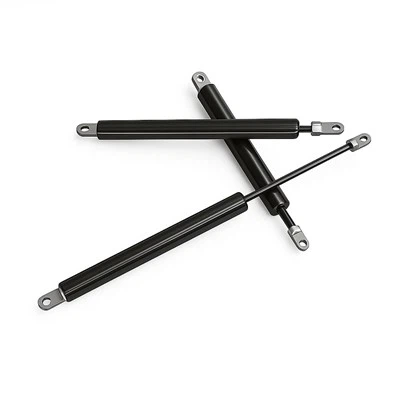
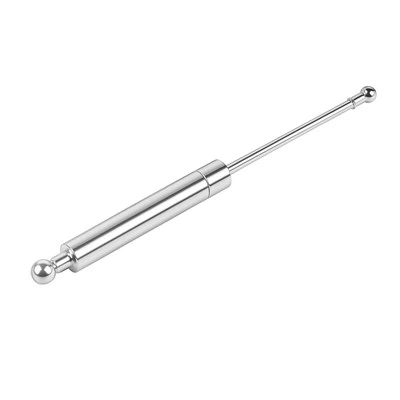
A gas spring, also called a gas strut or gas lift support, is a motion control component designed to assist lifting, support moving parts, hold a panel open, or provide controlled closing. Gas springs are widely used in doors, hatches, lids, windows, access panels, cabinets, storage compartments, medical devices, industrial machinery, RV and trailer compartments, and marine equipment.
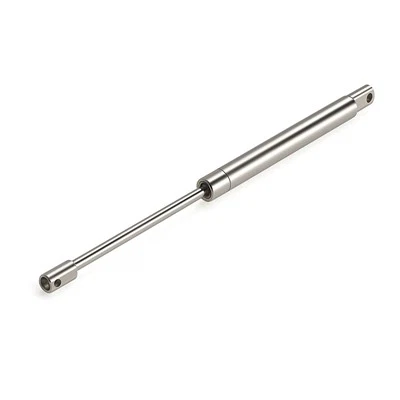
Depending on the application, you may need a standard compression gas spring, a stainless steel gas spring, a locking gas spring, a soft-close gas strut, or another custom motion control solution.

How to Choose the Right Gas Spring
Selecting the right gas spring starts with understanding your application and movement requirements

Application Type
Start by defining where the gas spring will be used. Different applications may require different force ranges, materials, and mounting methods. Common applications include:
- Doors, hatches, and lids
- Windows, panels, and access covers
- Cabinets and equipment enclosures
- RV and trailer storage compartments
- Marine hatches and outdoor equipment
- Industrial covers and machinery guards
Key Selection Factors
- Force — the support force needed for lifting and holding
- Stroke — the travel distance required during opening and closing
- Length — the available installation space in open and closed positions
- Mounting — the fitting type, bracket style, and installation direction
- Environment — indoor, outdoor, marine, corrosive, or temperature-sensitive use
- Function — standard lift assist, soft-close, position hold, or locking

Why Engineering Review Matters

A gas spring may look simple, but incorrect selection can lead to poor opening balance, excessive closing force, reduced service life, mounting problems, or unsatisfactory user experience. Early engineering review helps reduce trial-and-error, improve motion performance, and shorten development time.
For OEM and custom gas spring projects, engineering support is especially important when installation space is limited, movement angles are unusual, environmental conditions are harsh, or durability requirements are high.
Frequently Asked Questions
How do I choose the right gas spring force?
+
-
Gas spring force depends on panel weight, hinge position, center of gravity, and mounting geometry. In many cases, force should be confirmed through calculation, prototype testing, or engineering review.
What is the difference between a gas spring and a gas strut?
+
-
In most industrial applications, gas spring and gas strut are often used as similar terms. Both refer to components that provide lifting assistance and motion control.
Can I use a standard gas spring instead of a custom one?
+
-
If the application dimensions, force, and mounting points match a standard product, a standard gas spring may be suitable. If not, a custom gas spring is usually the better choice.
When should I choose a stainless steel gas spring?
+
-
Stainless steel gas springs are recommended for marine, coastal, wet, corrosive, and outdoor environments where rust resistance is important.
What if I do not have a CAD drawing?
+
-
That is not a problem. You can send photos, hand sketches, application dimensions, or sample information. Our team can still review the project and suggest a suitable gas spring solution.
Need Help Choosing the Right Gas Spring
Send us your drawing, sketch, sample photo, or key installation dimensions. Our team can review your application and recommend a suitable standard or custom gas spring solution.
Send Your Drawing
Share your CAD file, sketch, sample photo, or key dimensions for review.
Get Engineering Support
Our team helps evaluate force, stroke, fittings, and mounting requirements.
Receive A Recommendation
We suggest a suitable standard or custom gas spring solution for your project.
Popular Products