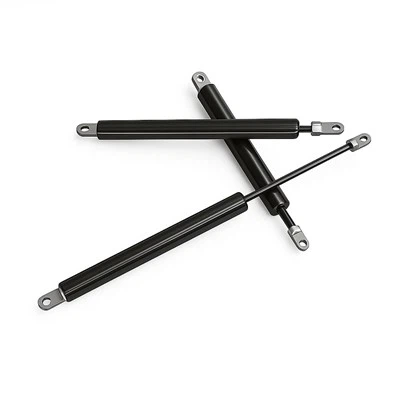
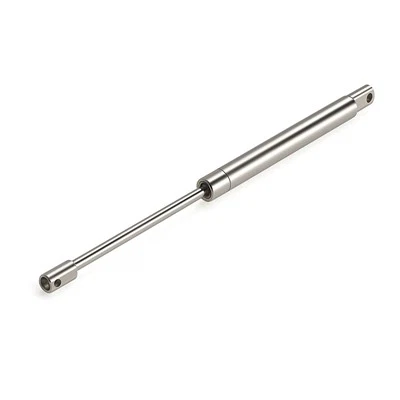
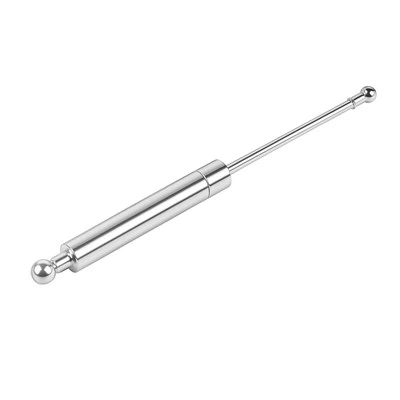
Stainless Steel Gas Spring
Stainless steel gas springs are designed for applications where corrosion resistance, surface durability, and more reliable long-term performance are important. They are widely used in boat hatches, marine compartments, outdoor enclosures, coastal equipment, food-related environments, and other humid or corrosion-sensitive applications.
-
![Stainless Steel 316 Gas Springs Corrosion-Resistant]() Stainless Steel 316 Gas Springs Corrosion-ResistantLand corrosion-resistant stainless steel gas springs are made from AISI 316 material, perfect for marine applications, food grade environments, and medical equipment. Find the perfect replacement gas
Stainless Steel 316 Gas Springs Corrosion-ResistantLand corrosion-resistant stainless steel gas springs are made from AISI 316 material, perfect for marine applications, food grade environments, and medical equipment. Find the perfect replacement gas -
![304 316 Stainless Locking Gas Springs]() 304 316 Stainless Locking Gas SpringsLand stainless locking gas springs (304/316) feature polished gas cylinders and rods with stainless end fittings for superior corrosion resistance. Rigid or elastic locking holds positions securely,
304 316 Stainless Locking Gas SpringsLand stainless locking gas springs (304/316) feature polished gas cylinders and rods with stainless end fittings for superior corrosion resistance. Rigid or elastic locking holds positions securely,


Within the range shown in the table below, we can manufacture compressed gas springs and even customize them to individual dimensions.
| Type | A | B | C | stroke x F1 Maximum value | D | E |
| Rod Diameter [mm] | Cylinder Diameter [mm] | Stroke [mm] | Basic Length Calculation [mm] | Calculated Elongation [mm] | ||
|
FBA06 |
6 | 15 | 20-300 | 60 000 | (C✖2)+35 | (C✖2)+35+G+H |
| FBA08 | 8 | 18 | 25-400 | 150 000 | (C✖2)+45 | (C✖2)+45+G+H |
| FBA10 | 10 | 22 | 30-500 | 300 000 | (C✖2)+50 | (C✖2)+50+G+H |
| FBA10/27 | 10 | 27 | 50-700 | 300 000 | (C✖2)+50 | (C✖2)+50+G+H |
| FBA14 | 14 | 28 | 50-800 | 800 000 | (C✖2)+50 | (C✖2)+50+G+H |
| FBA20 | 20 | 40 | 50-800 | 2 000 000 | (C✖2)+75 | (C✖2)+75+G+H |
Why Choose Us
Rich Experience
We had 30+ years of production experience, Annual output of 4 million pieces, product is tested for force, leakage, cycle life, and corrosion resistance to ensure consistent and reliable performance.
Custom Service
We provide tailored gas spring solutions based on your drawings or specifications, including force, stroke, materials, and fittings.
Our Certificate
ROHS, SGS, MSDS, CMRT test reports complying with international certification standards, ASTM-B117 200hours salt spray testing, and 100000 cycles of fatigue life testing passed.
304 vs 316 Stainless Steel2

304 stainless steel gas springs are commonly selected for general outdoor, humid, or washdown environments. 316 stainless steel gas springs are typically preferred for saltwater, coastal, marine, and more corrosion-sensitive applications where higher resistance is needed.
If the gas spring will be used on a boat hatch, marine compartment, outdoor enclosure near the coast, or exposed equipment in a salt-laden environment, 316 is usually the more suitable option.
304 Stainless Steel
suitable for general outdoor, humid, and washdown use
316 Stainless Steel
better for saltwater, coastal, marine, and harsher corrosion exposure

Material: Constructed from high-grade 316L stainless steel, offering exceptional resistance to corrosion, making them suitable for use in harsh environments, including exposure to saltwater and chemicals.
Force Range: Available in a wide range of force outputs to meet diverse application requirements.
Stroke Lengths: Customizable stroke lengths to accommodate specific application needs.
Temperature Range: Designed to operate effectively in temperatures ranging from -30°C to +80°C(-22°F to +176°F).
Maintenance-Free: Self-contained units that require no maintenance, ensuring long-term reliability.
Food-Grade Options: Available with food-grade oilfor applications in the food and beverage industry, complying with industry regulations.
Corrosion Environments & Marine Use
Stainless steel gas springs are often selected for applications exposed to humidity, weather, salt air, washdown conditions, or long-term outdoor service.

Boat Hatch
For deck hatches, inspection hatches, and access covers on boats and yachts.

Marine Compartment
For storage lids, service doors, and compartment openings exposed to humid or salt-rich air.

Outdoor Enclosure
For electrical cabinets, access panels, and equipment housings used outdoors.

Coastal Equipment
For equipment covers and access systems used near the ocean or in salt-belt conditions.

Washdown / Food Equipment
For applications requiring cleaner surfaces and better corrosion resistance.

Medical / Clean Equipment
For equipment that benefits from cleaner appearance and corrosion-resistant materials.
How to Specify a Stainless Steel Gas Spring

To recommend a suitable stainless steel gas spring, we usually need the application type, preferred material grade (304 or 316), required force, stroke, extended and compressed length, end fittings, mounting brackets, working environment, and opening angle or motion path.
For boat hatches, marine compartments, outdoor enclosures, coastal equipment, and other corrosion-sensitive applications, the working environment should always be considered during selection.
Application
Working Environment & Motion Path
Force & Stroke
Required force and stroke based on the load and movement
Length
Extended length and compressed length
End Fittings & Mounting Brackets
Preferred end fittings, bracket type, and mounting method
Material Preference
304 or 316 stainless steel
Tube & Housing
Stainless Steel 304, 316 - Grade 304 offers good general corrosion resistance for indoor or dry environments. Grade 316, containing molybdenum and higher nickel content, provides superior resistance to chlorides and marine environments.
Piston Rod
High-strength stainless steel with chrome plating, Resists tensile and compressive forces. Chrome plating enhances surface hardness, reduces friction, and prevents corrosion and wear during repeated motion.
Seals
Nitrile rubber (NBR), Polyurethane, Viton® (FKM), NBR is cost-effective for moderate temperatures. Polyurethane offers excellent abrasion resistance. Viton® is ideal for high-temperature and chemically aggressive environments.
End Fittings
Stainless steel (304/316), hardened steel, Ensure secure mounting and load transfer. Corrosion-resistant alloys maintain structural integrity in outdoor or wet conditions.

Quality & Testing

For stainless steel gas springs used in marine, outdoor, and corrosion-sensitive environments, corrosion resistance testing is especially important. Our products are tested for force, leakage, cycle life, and corrosion resistance, and are supported by ASTM-B117 200-hour salt spray testing and 100000-cycle fatigue life validation.
This helps support more reliable performance in boat hatches, marine compartments, outdoor enclosures, coastal equipment, and other applications exposed to humidity, weather, or salt-laden air.
Testing Focus:
Installation Precautions
Observe Design Limits
Use gas springs only within their rated load capacities, temperature ranges, and environmental tolerances.
01
Regular Inspection
While gas springs require little maintenance, periodic inspection for signs of wear, leaks, or damage is recommended. Catching issues early helps prevent unexpected failures.
02
Correct Installation
Follow manufacturer guidelines for mounting orientation, alignment, and torque on fittings. Incorrect installation can reduce lifespan or cause malfunction.
03
Avoid Unauthorized Modifications
Never attempt to open, refill, or modify a gas spring unless explicitly designed for adjustment.
04
Safe Disposal
When a gas spring reaches end-of-life, safely release internal pressure and recycle according to local regulations. Specialized recycling may be required for some industrial gas springs.
05
Certifications

Package & Delivery
Package: Standard export package or Custom
Delivery: By air express, by sea

FAQ
As one of the most experienced stainless steel gas spring manufacturers and suppliers in China, we also support customized service. Please feel free to buy cheap stainless steel gas spring in stock here from our factory. Welcome to view our website for more information.
block lift stainless locking struts, heavy duty stainless lockable gas springs, stainless pneumatic strutsPopular Products