Compression Gas Springs
Compression gas springs are widely used for lifting, supporting, and controlling the movement of doors, lids, hatches, covers, and access panels. At Land Gas Spring, we provide standard and custom compression gas spring solutions for RV compartment doors, toolbox lids, hatch covers, equipment covers, service panels, storage lids, and many other motion control applications.
Whether you are selecting compression gas springs for a new OEM project or replacing an existing gas spring in the field, the right solution depends on force, stroke, mounting geometry, working angle, and environment. This page helps you understand product basics, specifications, applications, industries, custom options, quality standards, and quotation support in one place.
-
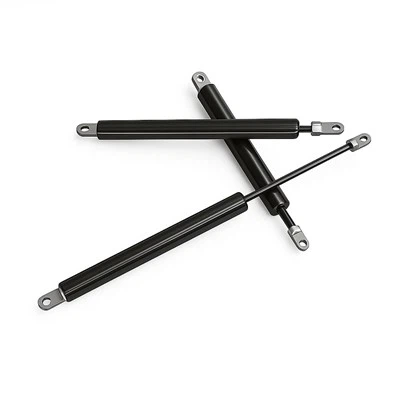
![Compression Gas Springs Heavy Duty Adjustable Force 100–1200N]() Compression Gas Springs Heavy Duty Adjustable Force 100–1200NLand heavy duty compression gas springs with adjustable force (50–2500 N) deliver smooth lifting, controlled lowering, and stable holding for lids, hatches, machine guards, and access panels. With
Compression Gas Springs Heavy Duty Adjustable Force 100–1200NLand heavy duty compression gas springs with adjustable force (50–2500 N) deliver smooth lifting, controlled lowering, and stable holding for lids, hatches, machine guards, and access panels. With -
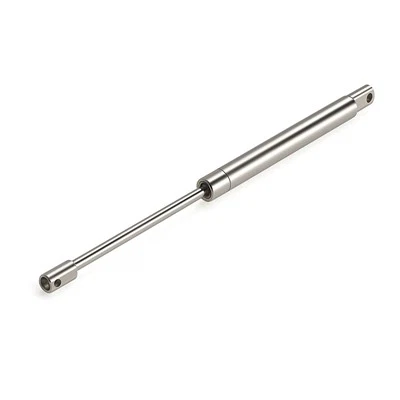
![Soft-Close Compression Gas Struts Damped Motion Control]() Soft-Close Compression Gas Struts Damped Motion ControlLand's soft-close compression gas struts provide smooth, controlled closing and stable hold-open without slamming. With tuned damping, adjustable force options, and multiple end fittings, they
Soft-Close Compression Gas Struts Damped Motion ControlLand's soft-close compression gas struts provide smooth, controlled closing and stable hold-open without slamming. With tuned damping, adjustable force options, and multiple end fittings, they -
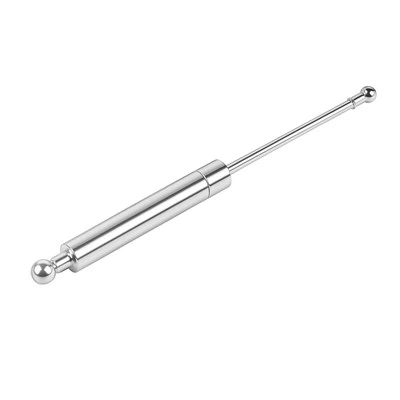
![Inter-Stop Gas Springs Position Hold]() Inter-Stop Gas Springs Position HoldLand Inter-Stop gas springs feature advanced position memory technology that allows stopping at any point within the stroke range. These precision gas struts provide smooth operation with 100-800N
Inter-Stop Gas Springs Position HoldLand Inter-Stop gas springs feature advanced position memory technology that allows stopping at any point within the stroke range. These precision gas struts provide smooth operation with 100-800N


Within the range shown in the table below, we can manufacture compressed gas springs and even customize them to individual dimensions.
| Type | A | B | C | stroke x F1 Maximum value | D | E |
| Rod Diameter [mm] | Cylinder Diameter [mm] | Stroke [mm] | Basic Length Calculation [mm] | Calculated Elongation [mm] | ||
|
FBA06 |
6 | 15 | 20-300 | 60 000 | (C✖2)+35 | (C✖2)+35+G+H |
| FBA08 | 8 | 18 | 25-400 | 150 000 | (C✖2)+45 | (C✖2)+45+G+H |
| FBA10 | 10 | 22 | 30-500 | 300 000 | (C✖2)+50 | (C✖2)+50+G+H |
| FBA10/27 | 10 | 27 | 50-700 | 300 000 | (C✖2)+50 | (C✖2)+50+G+H |
| FBA14 | 14 | 28 | 50-800 | 800 000 | (C✖2)+50 | (C✖2)+50+G+H |
| FBA20 | 20 | 40 | 50-800 | 2 000 000 | (C✖2)+75 | (C✖2)+75+G+H |
Send Your Required Stroke & Length
Why Choose Us

30+ Years of Manufacturing
Experience
Since 1993, we have focused on the designand manufacturing of gas springs and motion
control productsOur extensive industry experience enables usto understand different applicationrequirements and provide practical solutionsor automotive, marine, medical, furniture,fitness equipment, industrial machinery, andother applications.

Comprehensive Testing & Validation
Our products can be evaluated through arange of testing procedures, including forcetesting, pressure testing, leakage testing,salt spray testing, fatigue life testing, andtemperature testing.

Strong Production Capacity
With more than 10,000 m2 of manufacturingfacilities and an annual production capacityof approximately 4 million gas springs, we
are equipped to support both smallcustomized orders and large-volume
production programs.
Automated and standardized productionprocesses help us improve efficiency,maintain consistency, and respond quickly tochanging customer demand.

Flexible OEM & Customization
Different applications require differentsolutions. Our engineering team cancustomize gas springs according to yourspecific requirementsDrawings and technical solutions can bedeveloped quickly to help shorten yourproduct development cycle.
Drawing Review Within 24 Hours→
Product Overview

We are always at your service when you need
Compression gas springs, also called compression gas struts, use compressed gas inside the cylinder to provide extension force and lifting assistance. They are commonly used where a lid, cover, door, hatch, or panel needs smoother opening, reduced operating effort, and more stable support during movement.
Compared with unsupported manual opening, compression gas springs help improve control, reduce sudden drop risk, and create a more balanced opening and closing experience. They are widely used in RV compartment doors, toolbox lids, hatch covers, equipment covers, access panels, storage lids, bed lift systems, electrical enclosures, and industrial service doors.
Compression gas springs can be selected in standard sizes or customized according to installation space, load condition, required opening angle, end fittings, and environmental exposure. For many applications, correct matching is not only about product size, but also about motion path, leverage change, and long-term durability requirements.
Small Highlights :

Controlled Motion: Provides smooth, dampened movement to prevent jolts, ideal for lid lifting and damping applications.
High Force & Compactness: Delivers high force in a small footprint, suitable for space-constrained applications.
Adjustable/Custom Force: Available with fixed or adjustable force options, allowing customization of lifting power.
Maintenance-Free & Durable: Sealed construction requires no maintenance, with service life often exceeding 100,000 cycles.
Position Retention (Stop & Stay): Specific variants allow for friction locking, allowing the spring to hold a load in any position.
Versatile Mounting: Includes options like ball-and-socket, clevis, and eyelet fittings.
Compression Gas Spring Applications

RV Compartment Doors
Used for baggage doors, storage compartments, and service access panels to improve opening convenience and support stability.

Toolbox Lids
Used in truck toolboxes, storage boxes, and service compartments for smoother lifting and more controlled closing.

Hatch Covers
Suitable for deck hatches, floor hatches, inspection hatches, and other access openings that need reliable support.

Equipment Covers
Commonly used on machine covers, protective covers, service doors, and maintenance panels for safer and more controlled opening.

Access Panels
Used on industrial access panels, electrical enclosures, maintenance doors, and control cabinets with limited space.

Storage Lids & Bed Systems
Suitable for storage benches, furniture lids, bed lift systems, and hidden compartments that need easier lifting support.

Windows & Adjustable Panels
Used in opening window systems, adjustable panels, and pass-through structures that require better movement control.

Service Doors & Overhead Openings
Suitable for upper doors, flap doors, service access structures, and covers that need smoother assisted movement.
Material
Cylinder (Body)
Manufactured from strong steel or high-grade 316L stainless steel to withstand high-pressure nitrogen and hydraulic oil.
Piston Rod
Made of precision-engineered, often chrome-plated steel or stainless steel to ensure a smooth, durable surface.
Seals & Guides
Rubber O-rings are used to seal the pressurized cylinder.
Internal Components
The chamber is filled with compressed nitrogen gas and lubricating oil.
End Fittings and Mounting Options
The end fittings connect the gas spring to your system and are crucial for proper alignment, durability, and ease of installation. Common types include:
Ball Studs: Allow angular misalignment; ideal for lids and hatches.
Clevis Ends: Provide secure pin-based attachment; common in industrial equipment.
Loop Ends: Enable quick attachment with cotter pins or clevis pins.
Threaded Ends: Permit direct screw-in mounting for compact designs.
Installation Precautions
Observe Design Limits
Use gas springs only within their rated load capacities, temperature ranges, and environmental tolerances.
01
Regular Inspection
While gas springs require little maintenance, periodic inspection for signs of wear, leaks, or damage is recommended. Catching issues early helps prevent unexpected failures.
02
Correct Installation
Follow manufacturer guidelines for mounting orientation, alignment, and torque on fittings. Incorrect installation can reduce lifespan or cause malfunction.
03
Avoid Unauthorized Modifications
Never attempt to open, refill, or modify a gas spring unless explicitly designed for adjustment.
04
Safe Disposal
When a gas spring reaches end-of-life, safely release internal pressure and recycle according to local regulations. Specialized recycling may be required for some industrial gas springs.
05
Quality & Testing
Compression gas spring performance depends not only on basic design, but also on force consistency, sealing reliability, fatigue resistance, and corrosion protection. For real applications, these factors affect opening balance, user experience, durability, and safety.

At Land Gas Spring, quality control and testing are important parts of product development and production. Compression gas springs used in RV compartment doors, toolbox lids, hatch covers, equipment covers, and other frequently used opening systems must maintain stable support force and dependable sealing over time.
For outdoor, humid, or corrosion-sensitive applications, material choice and surface protection can be especially important. For high-cycle or heavier-duty applications, durability validation becomes even more critical to long-term performance.
Reliable compression gas springs are built not only by design, but also by consistent production control and practical quality verification.
Force testing
Leakage testing
Cycle life testing
Corrosion resistance testing
Material inspection
Assembly & dimensional verification
Certifications

Package & Delivery
Package: Standard export package or Custom
Delivery: By air express, by sea,by express

FAQ
As one of the most experienced compression gas spring manufacturers and suppliers in China, we also support customized service. Please feel free to buy cheap compression gas spring in stock here from our factory. Welcome to view our website for more information.
damped motion control gas springs, inter stop compression gas springs, Industrial gas shocks heavy dutyPopular Products