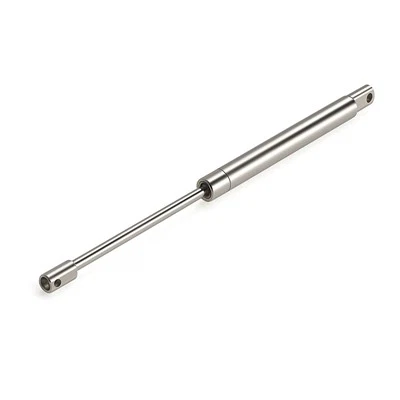
Installing boat access panel gas struts on a curved panel can be a challenging yet rewarding task. As a supplier of Boat Access Panel Gas Struts, I've had the opportunity to witness firsthand the importance of a proper installation. In this blog post, I'll guide you through the process, sharing tips and insights based on my experience in the industry.
Understanding the Basics of Boat Access Panel Gas Struts
Before we dive into the installation process, it's crucial to understand what boat access panel gas struts are and how they work. Gas struts, also known as gas springs, are mechanical devices that use compressed gas to provide support and assistance in opening and closing panels. They consist of a cylinder filled with gas, a piston rod, and end fittings.
The main advantage of using gas struts on boat access panels is that they make it easier to open and close the panels, reducing the effort required by the user. They also help to keep the panels in an open position, preventing them from slamming shut unexpectedly.
Tools and Materials You'll Need
To install boat access panel gas struts on a curved panel, you'll need the following tools and materials:
- Gas struts: Make sure you choose the right size and strength of gas struts for your boat access panel. The size and strength of the gas struts will depend on the weight and size of the panel.
- Drill and drill bits: You'll need a drill to make holes for the mounting brackets.
- Screwdriver: A screwdriver will be used to tighten the screws on the mounting brackets.
- Measuring tape: To measure the distance between the mounting points and ensure accurate installation.
- Mounting brackets: These are used to attach the gas struts to the boat and the access panel.
- Pencil: To mark the drilling points on the panel and the boat.
Step-by-Step Installation Process
Step 1: Measure and Mark the Mounting Points
The first step in installing boat access panel gas struts on a curved panel is to measure and mark the mounting points. Start by closing the access panel and measuring the distance between the points where you want to mount the gas struts. Use a measuring tape to get accurate measurements.
Mark the mounting points on the panel and the boat using a pencil. Make sure the marks are clear and visible.
Step 2: Drill the Holes
Once you have marked the mounting points, it's time to drill the holes. Use a drill bit that is the appropriate size for the screws you'll be using to attach the mounting brackets.


Drill the holes carefully, making sure they are straight and perpendicular to the surface. If you're drilling into a curved panel, it may be helpful to use a drill guide to ensure accuracy.
Step 3: Install the Mounting Brackets
After drilling the holes, install the mounting brackets on the panel and the boat. Use a screwdriver to tighten the screws securely. Make sure the mounting brackets are firmly attached and aligned correctly.
Step 4: Attach the Gas Struts
Once the mounting brackets are installed, it's time to attach the gas struts. Connect one end of the gas strut to the mounting bracket on the boat and the other end to the mounting bracket on the access panel.
Make sure the gas struts are properly aligned and that the end fittings are securely attached. You may need to use a wrench or pliers to tighten the fittings if necessary.
Step 5: Test the Installation
After attaching the gas struts, test the installation by opening and closing the access panel. The gas struts should provide smooth and easy operation, making it easier to open and close the panel.
If the gas struts are not working properly, check the alignment of the mounting brackets and the end fittings. Make sure everything is tightened securely and that there are no obstructions preventing the gas struts from functioning correctly.
Tips for Installing Gas Struts on a Curved Panel
Installing gas struts on a curved panel can be more challenging than on a flat panel. Here are some tips to help you achieve a successful installation:
- Use flexible mounting brackets: Flexible mounting brackets can help to accommodate the curvature of the panel and ensure a proper fit.
- Adjust the angle of the gas struts: Depending on the curvature of the panel, you may need to adjust the angle of the gas struts to ensure optimal performance.
- Take your time: Installing gas struts on a curved panel requires patience and precision. Take your time to measure, mark, and drill the holes accurately to ensure a proper installation.
Other Applications of Gas Struts
Gas struts are not only used in boat access panels but also in a wide range of other applications. Some of these applications include:
- Treadmill Rower Fold-Assist Gas Springs: Gas struts are used to assist in folding and unfolding treadmills and rowing machines, making them easier to store and transport.
- Medical Carts and Instrument Arms Gas Springs: In the medical field, gas struts are used to provide support and adjustability for medical carts and instrument arms.
- Hood Lift Supports: Gas struts are commonly used in automotive applications to support the hood of a car, making it easier to open and close.
Contact Us for Your Gas Strut Needs
If you're in the market for high-quality boat access panel gas struts or have any questions about installation, we're here to help. As a leading supplier of gas struts, we offer a wide range of products to meet your specific needs.
Whether you're a boat owner, a manufacturer, or a contractor, we can provide you with the right gas struts and support to ensure a successful installation. Contact us today to discuss your requirements and get a quote.
References
- Boat Building and Repair Manual
- Gas Strut Installation Guide
- Marine Hardware Catalog