Gas Springs vs. Mechanical Coil Springs: Which Is Better for OEM Applications?
When designing a lifting mechanism, access panel, equipment cover, or movable enclosure, one important decision is choosing the right spring system.
Should you use a gas spring or a traditional mechanical coil spring?
Both solutions store energy and help support moving loads, but they work in different ways. Their force characteristics, motion control, installation requirements, and application suitability can vary significantly.
For OEM engineers and equipment manufacturers, understanding these differences is essential for selecting a solution that provides reliable performance, convenient operation, and an efficient mechanical design.
In this guide, we compare gas springs and mechanical coil springs, explain their working principles, and discuss which option may be more suitable for different industrial applications.
1. How Does a Gas Spring Work?
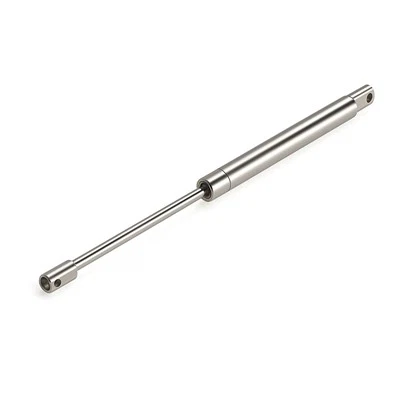
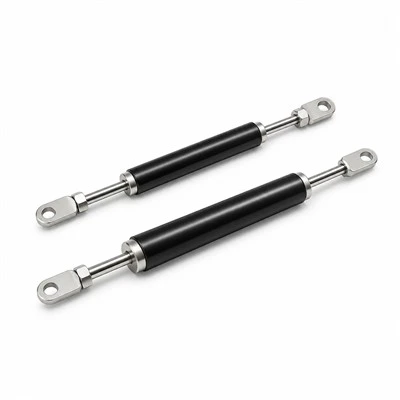
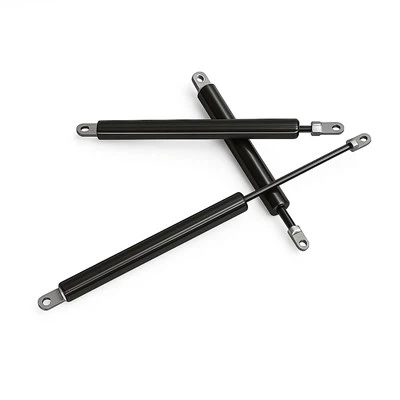
A gas spring is a sealed hydropneumatic component that uses compressed nitrogen to generate an extension force.
A standard compression gas spring typically consists of:
- A pressure cylinder.
- A piston rod.
- An internal piston.
- Sealing and guiding components.
- Compressed nitrogen.
- A small quantity of lubricating oil.
When the piston rod is pushed into the cylinder, the available gas volume decreases.
This increases the internal pressure and generates a reaction force that pushes the rod outward.
When the external load is reduced sufficiently, the gas spring extends and helps lift or support the connected structure.
Key Characteristics of Gas Springs
Controlled Extension Force
The extension force is determined by the internal gas pressure and the effective area of the piston rod.
Progressive Force Characteristics
As the piston rod is compressed, the gas pressure increases. Consequently, the force generally becomes higher toward the compressed end of the stroke.
Compact Construction
A gas spring combines a pressure cylinder, piston rod, and internal working components into one relatively compact unit.
Optional Motion Control
The internal piston passage can regulate gas and oil flow. Depending on the design, hydraulic end damping can also help slow movement near the end of travel.
Gas springs are commonly used in vehicle tailgates, storage compartments, industrial equipment covers, furniture, and access panels.
2. How Does a Mechanical Coil Spring Work?
A mechanical coil spring stores energy through the elastic deformation of a metal spring.
When an external force compresses or extends the spring, the metal wire deforms and generates a restoring force.
For a conventional linear-rate compression coil spring, the relationship between force and displacement follows Hooke's Law:
F = k × x
Where:
- F = Spring force.
- k = Spring rate or stiffness.
- x = Spring displacement.
The greater the compression, the greater the restoring force.
Mechanical springs come in several configurations:
- Compression springs.
- Extension springs.
- Torsion springs.
- Constant-force springs.
- Progressive-rate springs.
Each type is designed for different mechanical requirements.
Key Characteristics of Mechanical Coil Springs
Simple Mechanical Construction
Traditional coil springs generally have fewer internal components than a gas spring assembly.
Direct Elastic Force
The spring generates a restoring force through the deformation of its metal structure.
Flexible Design Options
Different wire diameters, coil diameters, materials, and spring rates can be selected to achieve specific performance requirements.
Independent Damping Requirements
A conventional coil spring does not inherently provide hydraulic damping. If controlled movement is required, a separate damper may need to be incorporated into the mechanism.
3. Gas Springs vs. Mechanical Coil Springs: Key Differences
Although both technologies provide mechanical assistance, their operating characteristics are different.
The following table summarizes the main differences:
| Comparison | Gas Spring | Mechanical Coil Spring |
|---|---|---|
| Energy storage | Compressed nitrogen | Elastic deformation of metal |
| Force generation | Gas pressure acting on effective piston area | Mechanical spring deformation |
| Force characteristics | Progressive over the stroke | Usually linear for conventional linear-rate springs |
| Motion control | Can incorporate internal flow control and damping | Usually requires a separate damper |
| Installation | Requires mounting points and sufficient stroke space | Requires suitable spring seats or guides |
| Position support | Can assist lifting and positioning | Depends on spring type and mechanical arrangement |
| Force adjustment | Available through specified gas charging or customized design | Determined by spring rate, dimensions, and preload |
| Maintenance | Sealed unit; generally replaced if internally damaged | Can often be inspected as a mechanical component |
| Typical applications | Lids, hatches, covers, lifting mechanisms | Suspensions, mechanisms, industrial equipment |
Neither technology is universally better. The correct choice depends on the movement, load, available installation space, and performance requirements of the application.
4. Understanding the Difference in Force Characteristics
Force behavior is one of the most important considerations when comparing gas springs and mechanical springs.
Gas Spring Force Progression
A compression gas spring generates an extension force through compressed nitrogen.
As the piston rod enters the cylinder, the available gas volume decreases and internal pressure increases. Therefore, the extension force normally rises as the gas spring approaches its compressed position.
Two commonly referenced force values are:
- F1: Extension force near the fully extended position.
- F2: Extension force near the compressed position.
The force progression ratio can be expressed as:
Progression Ratio = F2 / F1
The exact ratio depends on the gas spring's internal volume, piston rod diameter, stroke, and construction. This characteristic should be considered when selecting a gas spring for a moving lid or panel.
Mechanical Coil Spring Force
A conventional linear-rate coil spring follows Hooke's Law. Its restoring force increases in proportion to the amount of displacement.
For example, if a linear-rate spring has a spring rate of 20 N/mm:
- At 5 mm compression, the additional spring force is 100 N.
- At 10 mm compression, the additional spring force is 200 N.
- At 15 mm compression, the additional spring force is 300 N.
These values represent the force generated by the spring's displacement under the simplified linear model, excluding other system forces. Progressive-rate coil springs can have nonlinear force characteristics, so not all mechanical springs follow the same force curve.
Why Does This Difference Matter?
In applications involving hinged lids, access panels, or lifting covers, the required support force changes as the structure moves. A gas spring's force progression and mounting geometry must therefore be evaluated together.
Similarly, a mechanical spring must be selected according to its spring rate, preload, working displacement, and installation arrangement. The goal is to ensure that the complete mechanism operates properly throughout its travel.
5. Which Solution Provides Better Motion Control?
Motion control is another important difference.
A gas spring can incorporate internal damping characteristics through its piston and flow-control structure. As the piston moves, nitrogen and oil pass through calibrated passages, influencing extension and compression speed.
Certain gas spring configurations also provide hydraulic end damping, helping reduce abrupt movement near the end of travel. However, standard gas springs should not automatically be treated as dedicated hydraulic dampers.
A mechanical coil spring generally stores and releases energy without controlling the speed of movement. For applications requiring smoother motion, a separate hydraulic damper may be installed alongside the mechanical spring.
For example:
- A gas spring can assist with lifting a storage lid.
- A hydraulic damper can provide additional motion control.
- A mechanical spring can provide restoring force.
- A separate damper can reduce unwanted movement.
6. Installation Space and Mechanical Design Considerations
The available installation space can influence which spring technology is more suitable.
Gas Spring Installation
A gas spring generally requires:
- A suitable extended length.
- A suitable compressed length.
- The required stroke.
- Appropriate mounting brackets.
- Correct pivot positions.
- Sufficient clearance throughout the movement.
Gas springs are particularly useful when a compact linear support component is required between a fixed structure and a moving panel.
Mechanical Coil Spring Installation
A coil spring requires suitable seating or guiding structures. Depending on the design, additional components may include:
- Spring seats.
- Guide rods.
- Retaining plates.
- Mechanical stops.
- Separate dampers.
Compression springs also require sufficient working space to avoid coil bind, which occurs when the spring reaches its solid height.
7. Which Spring Is Better for Different Applications?
The following examples provide a practical starting point for OEM product designers:
| Application | Recommended Starting Point | Reason |
|---|---|---|
| Automotive tailgates | Gas spring | Lifting assistance and controlled movement |
| RV storage compartments | Gas spring | Convenient lid support |
| Boat access hatches | Gas spring | Lifting assistance for marine covers |
| Industrial equipment covers | Gas spring or coil spring | Depends on movement and load requirements |
| Vehicle suspension systems | Mechanical coil spring | Designed for supporting dynamic suspension loads |
| Small mechanical return mechanisms | Mechanical coil spring | Simple restoring force |
| Furniture lifting mechanisms | Gas spring or coil spring | Depends on positioning and operating requirements |
| Machinery vibration systems | Mechanical spring with suitable damper | Combined energy storage and vibration control |
For OEM applications involving lifting lids, access panels, and movable covers, gas springs are often a practical solution because they combine lifting assistance with a compact installation arrangement.
For suspension and other applications requiring substantial mechanical energy storage under repeated dynamic loading, specially designed mechanical springs may be more appropriate.
8. Can Gas Springs and Mechanical Springs Be Used Together?
Yes. In some mechanical systems, combining different spring technologies can provide useful performance advantages.
For example, an industrial access cover may use a mechanical spring to provide a specific restoring characteristic and a gas spring to assist lifting.
When combining components, engineers should evaluate:
- The force contribution of each component.
- The movement path.
- Mounting geometry.
- Operating speed.
- Structural strength.
- Safety requirements.
- The complete system's behavior throughout its travel.
9. What Should OEM Engineers Consider Before Choosing a Gas Spring?
If a gas spring appears to be the more suitable option, several technical parameters should be confirmed before ordering:
- Required Extension Force: Determine the force needed to support the moving structure based on weight and center of gravity.
- Stroke Length: Must match the required movement of the application.
- Extended and Compressed Length: Verify dimensions fit available installation space.
- Number of Gas Springs: Single or dual configuration based on load distribution and symmetry.
- End Fittings and Mounting Brackets: Ensure connection types provide necessary articulation.
- Operating Environment: Factor in temperature, humidity, corrosion exposure, and operating frequency.
- Additional Damping Requirements: Confirm whether integrated damping or a separate hydraulic damper is needed.
10. How LAND Gas Springs Supports Customized OEM Applications
LAND Gas Springs manufactures customized gas springs and motion control products for automotive, marine, RV, furniture, and industrial equipment applications.
Our main product range includes:
- Compression Gas Springs.
- Stainless Steel Gas Springs.
- Safety Locking Gas Springs.
- Adjustable Gas Springs.
- Traction Gas Springs.
- Hydraulic Dampers.
- Mounting Brackets and End Fittings.
For OEM and ODM projects, LAND supports customers with customized force/stroke specifications, engineering CAD reviews, sample development, material selection, and rigorous quality inspection.
Explore our Gas Spring Product Range and OEM/ODM Manufacturing Capabilities.
Frequently Asked Questions
Are gas springs stronger than mechanical coil springs?
Not necessarily. Both technologies can be designed for different force requirements. The appropriate choice depends on the required force, dimensions, stroke, and application conditions.
Do gas springs provide better motion control?
Gas springs can incorporate internal flow control and, in certain designs, hydraulic end damping. Conventional coil springs generally require a separate damper when controlled movement is needed.
Do gas springs lose force over time?
A properly manufactured and correctly installed gas spring is designed to maintain its performance during its intended service life. However, seal wear, leakage, operating conditions, and other factors can affect its force over time.
Can a mechanical coil spring replace a gas spring?
In some applications, yes. However, the installation structure, force characteristics, movement, and damping requirements may need to be redesigned.
Are gas springs suitable for heavy industrial applications?
Yes, gas springs can be customized for a wide range of industrial applications. The required force, stroke, dimensions, mounting geometry, and operating conditions must be evaluated.
Can gas springs and hydraulic dampers work together?
Yes. A gas spring can provide lifting assistance while a separate hydraulic damper controls movement speed. This combination can be useful in applications requiring both support and additional motion control.
Conclusion: Choose the Spring Technology That Matches Your Application
Gas springs and mechanical coil springs both play important roles in modern mechanical engineering. Gas springs are particularly useful for lifting assistance, positioning, and applications where compact construction and controlled movement are important. Mechanical coil springs remain valuable for applications requiring elastic energy storage, restoring force, and specific mechanical spring characteristics.
Looking for a Customized Gas Spring Solution?
LAND Gas Springs provides OEM and ODM gas spring manufacturing services for automotive, marine, RV, furniture, and industrial applications.
Send us your technical drawings, required force, stroke, and application details. Our team can help review your requirements and discuss a suitable customized solution.
Website: https://www.land-gassprings.com/
Email: info@land-gassprings.com
Technical References
- Gemini Gas Springs
How Gas Springs Work
https://www.geminigassprings.com/guides/how-gas-springs-work - SUSPA
Gas Springs: Working Principle and Technical Characteristics
https://www.suspa.com/us/products/gas-springs - ACE Controls
Gas Spring Operating Principles and Force-Stroke Characteristics
https://www.acecontrols.com/media/acedownloads/ACE_Main-Catalogue-2017-EN_20210826.pdf - Tech Briefs
Understanding the Basics of Gas Spring Application
https://www.techbriefs.com/component/content/article/34117-understanding-the-basics-of-gas-spring-application