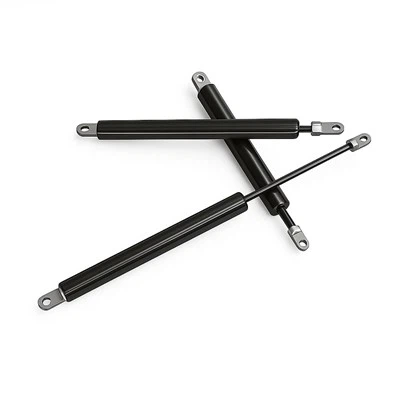
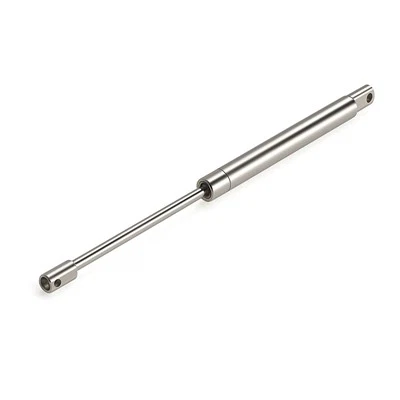
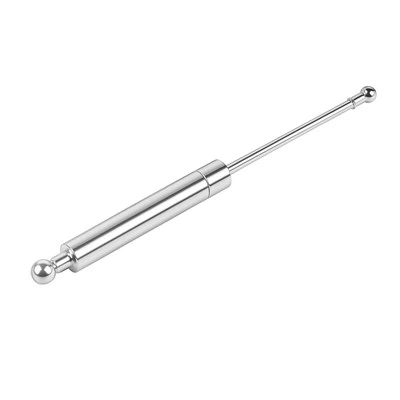
Choosing the right end fittings for gas springs is just as important as choosing force and stroke. The end connection determines alignment, load path, serviceability, and-ultimately-product life. This illustrated guide from Land explains the most common end types, when to use each, and how to size and mount them for reliable, low-maintenance performance. Along the way, it naturally covers search intent such as gas spring end fittings M6/M8/M10, ball socket vs clevis, quick-release gas strut connector, and spherical end to reduce side-load.
Ball socket, clevis, eye/ring, threaded rod end, swivel/spherical joint, and quick-release connector-typical options in Land's catalog.
A quick decision path to the optimal connector based on application constraints.
Why end fittings matter
- Alignment & side-load: Gas springs are designed for axial loading. The wrong end fitting can introduce side-load that damages seals.
- Adjustability: Some projects need precise length tuning; others need tool-less removal for maintenance.
- Envelope: End fittings consume space; compact options can make or break a tight design.
- Durability: Choosing the right metal (zinc-nickel, stainless 304/316) and a load-rated design ensures long service life.
The most common end fittings (and when to use them)
1) Ball Socket (M6/M8/M10)
- Best for: General-purpose use where misalignment tolerance and fast assembly are priorities-toolboxes, vehicle hatches, enclosures.
- Why it works: The spherical interface allows angular rotation, minimizing side-load on the rod guide.
- SEO intent embedded: gas spring ball socket end M8, universal gas strut ball stud bracket.
2) Clevis (with pin)
- Best for: Tight envelopes or precise hinge-line placement on machinery guards and compact panels.
- Why it works: Short stack height; pin defines a clean pivot.
- Tip: Add a thin washer to prevent binding; use a greased pin where noise is a concern.
3) Eye / Ring End
- Best for: Robust mechanical interfaces, marine fittings, and retrofits to existing bolts or pins.
- Why it works: High tensile strength and simple, corrosion-resistant geometry.
- SEO intent: gas spring eye end metric, ring end gas strut connector.
4) Threaded Rod End (Adjuster)
- Best for: Fine length adjustment during commissioning; useful on test rigs and multi-variant OEM builds.
- Why it works: Thread engagement provides ±5–10 mm of effective length tuning.
- Tip: Use threadlocker after final set; verify minimum thread engagement per spec.
5) Swivel / Spherical Joint
- Best for: High vibration or complex motion paths where combined misalignment + rotation occurs (e.g., off-axis mounts).
- Why it works: A spherical bearing handles angular and limited radial motion, cutting side-load dramatically.
- SEO intent: spherical end fitting for gas springs, anti side-load gas strut joint.
6) Quick-Release Connector
- Best for: Frequent removal for maintenance or changeover (food & beverage lines, lab gear).
- Why it works: Tool-less latch enables rapid decoupling while keeping axial load when engaged.
- Tip: Specify secondary safety clips in high-vibration environments.
Material & finish recommendations
- General industrial: Zinc-nickel plated carbon steel ball sockets/clevis ends; class-rated pins.
- Washdown / marine: 316 stainless end fittings and ball studs; pair with nitrided/polished rods.
- Temperature: Use polymer bearing liners rated for your range (e.g., −30 °C to +80 °C).
- Compliance: Load-rated hardware with traceable specs-ask Land for data sheets and PPAP when required.
Sizing rules of thumb
- Thread & stud size:
oMicro/mini struts: M5–M6
oStandard: M8 (most common)
oHeavy duty: M10–M14
- Pin diameter: Match the fitting (e.g., 6–10 mm typical) and keep pin shear margin ≥2× peak static load.
- Length budget: Account for the stack height of each fitting; it changes extended/compressed lengths.
Mounting best practices (from Land field notes)
1.Align the line of action through both pivots to prevent binding.
2.Use slotted brackets on at least one end to fine-tune leverage during commissioning.
3.Don't use the gas spring as a mechanical stop-add blocks or hinge limits.
4.Torque + retainers: Use prevailing-torque nuts or threadlocker; add safety clips on clevis/quick-release pins.
5.Corrosion plan: For outdoor/marine, combine 316 fittings with sealed ball studs and stainless brackets.
Troubleshooting
- Socket pops off the ball: Ball size mismatch or side-load-confirm the correct ball diameter and add a spherical/swivel end if misalignment persists.
- Clicking at the end fitting: Dry pin or ovalized hole-replace pin/bush and lubricate.
- Difficult installation length: Switch to a threaded rod end to gain a few millimeters of adjustability.
- Premature seal wear: Swap to spherical joint or correct bracket geometry to remove side-load.
Quick selector table
|
Constraint |
Recommended Land end fitting |
Notes |
|
Misalignment tolerance |
Ball socket |
Fast snap-on assembly with ball studs |
|
Tight envelope |
Clevis |
Short stack height; precise hinge line |
|
Bolt/pin interface |
Eye/Ring |
High tensile strength; simple retrofit |
|
Fine length tuning |
Threaded rod end |
Lock after commissioning |
|
Vibration/side-load |
Swivel/Spherical |
Protects seals and reduces wear |
|
Frequent removal |
Quick-release |
Add safety clip in high-vibe zones |
Why choose Land for gas spring end fittings
- Full ecosystem: Ball studs, brackets, and fittings engineered to work together-load-rated and documented.
- Materials to match your environment: Carbon steel with Zn-Ni, 304/316 stainless, and food-grade options.
- Rapid sampling & CAD: STEP files for quick layout; global support and short lead times.
- OEM customization: Thread types (metric/imperial), special bore sizes, and captive pins.
- Download the visuals for your product page
- End fittings gallery

- Selection flowchart

Need a recommendation today? Share your force/stroke, available length, mounting thread/pin, and environment. The Land team will reply with the exact end fitting and bracket kit-plus torque specs and CAD-so your gas spring installs right the first time.