In hospitals, nursing homes, and long-term care facilities, beds are no longer static furniture. Modern hospital and nursing beds move in several axes to support treatment, nursing care, and patient comfort. Behind every smooth backrest lift or safe height adjustment, there are hidden components such as hospital bed gas springs, nursing bed gas springs, and medical bed gas struts that make these motions possible.
For medical bed manufacturers, selecting the right gas lift cylinders for nursing beds and pneumatic struts for hospital beds is a technical task: loads, geometry, hygiene, and safety standards all need to be considered. This guide walks through the key design points and how Land Gas Springs can support you as an OEM partner.
Image idea: A side view of an adjustable hospital bed with icons indicating gas springs at the backrest, leg section, and lifting frame.
1. Where Gas Springs Work Inside Hospital and Nursing Beds
Different sections of the bed need different motion characteristics. Typical gas-spring-assisted functions include:
1.1 Backrest and Leg Section Adjustment
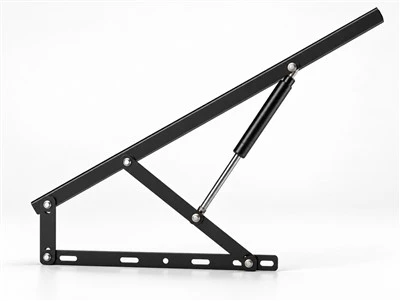
The most common application for hospital bed gas springs and nursing bed gas springs is the reclining backrest and leg section. Here you typically use:
- Compression gas springs for medical furniture to support the patient's upper body
- Gas props for patient beds for leg and foot sections
- Block-lift gas struts (medical use) where staff need multiple secure positions for rehabilitation or feeding
1.2 Bed Height and Trendelenburg Functions
Some beds use gas-spring support or combined hydraulic systems for lifting frames:
- Hydraulic struts for hospital lifting as part of scissor or column lifting systems
- Gas rams for ICU beds to assist in emergency height changes or tilt positions
- Nitrogen gas springs for healthcare beds where stable force over time is critical
1.3 Special Applications: Cots, Side Rails, and Accessories
Beyond standard beds, motion control is also needed for:
- Gas pistons for medical cots in pediatric wards
- Side rail mechanisms using compact non-locking medical gas springs
- Auxiliary components (over-bed tables, footrests, examination attachments) using small compression gas springs for medical furniture
Image idea: Three small images: an ICU bed, a nursing home bed, and a pediatric cot with arrows pointing to gas spring locations.
2. Technical Sizing: Load, Geometry, and Operating Force
Correct sizing of adjustable hospital bed gas lift supports and gas lift cylinders for nursing beds ensures staff can adjust the bed safely with minimal effort.
2.1 Determine Loads and Center of Gravity
For each moving section, define:
- Total load (mattress + patient + frame + accessories)
- Pivot position and distance to the section's center of gravity
- Required angle range (e.g. 0–70° for backrest, 0–40° for leg section)
- Target operating effort for caregivers (one-hand or two-hand operation)
Using these inputs, Land Gas Springs calculates the necessary force and stroke for pneumatic struts for hospital beds and gas props for patient beds, ensuring smooth motion in both loaded and unloaded conditions.
2.2 Stroke, Mounting Position, and Kinematics
The interaction between gas spring and linkage geometry is critical:
- Too short a stroke and the section won't reach the full angle
- Poor mounting angles can cause high initial effort and sudden "drop-off" of support
- Well-designed gas rams for ICU beds will provide progressive assistance through the full movement
Land Gas Springs works with your 2D/3D bed models to propose optimized mounting points for medical bed gas struts and tension compression gas springs for beds so the bed feels intuitive and safe for nursing staff.
2.3 Adjustable Force and Fine Tuning
Real patient loads and accessory combinations vary. OEMs often specify adjustable force medical gas springs (a subset of hospital bed gas springs) so force can be fine-tuned during prototype builds:
- Start with a higher pre-charge pressure
- Carefully bleed to reach the ideal assistance level
- Balance between easy actuation and stable holding in every position
Image idea: Engineering sketch showing the backrest section, pivot, gas spring, and angles for minimum and maximum positions.
3. Hygiene and Surface Requirements in Healthcare Environments
Beds in hospitals and nursing homes are disinfected multiple times per day. Hospital bed gas springs and nursing bed gas springs must withstand this cleaning regime.
3.1 Cleanable Design
Key design features for compression gas springs for medical furniture include:
- Smooth outer surfaces without sharp edges or dirt traps
- Closed, sealed designs that prevent fluid ingress
- Compatibility with alcohol- and chlorine-based disinfectants
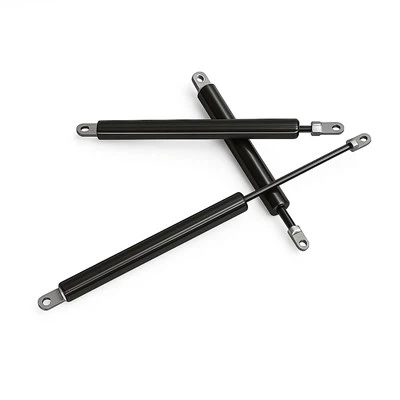
Black nitrided hospital bed gas springs offer a hard, corrosion-resistant rod surface with low porosity and an elegant dark appearance that hides minor marks and matches modern bed designs.
3.2 Corrosion Resistance and Coatings
Even in indoor environments, condensation, oxygen, and chemicals can trigger corrosion. Land Gas Springs offers:
- Robust cylinder coatings for hydraulic struts for hospital lifting and gas rams for ICU beds
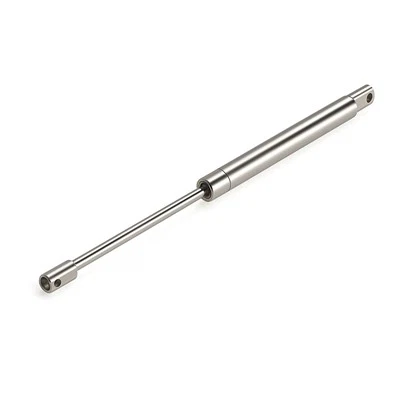
- Nitrided or stainless rod options for improved wear and corrosion resistance
- Testing support to validate your hospital bed gas springs under repeated cleaning cycles
Image idea: Close-up of a black nitrided gas spring on a white hospital bed frame, showing smooth, easy-to-clean surfaces.
4. Safety, Standards, and Motion Control
Patient safety and compliance with healthcare standards are central to bed design. Gas springs and dampers are part of that safety chain.
4.1 Controlled Motion and Soft Closing
To protect both patients and caregivers, soft-close dampers for hospital beds and soft-damped non-locking medical gas springs help:
- Prevent abrupt drops of the backrest or leg section
- Reduce the risk of injury when adjusting beds with fragile or elderly patients
- Lower noise levels in ICUs and nursing homes
Soft-closing functions are especially important for gas rams for ICU beds where critical patients are sensitive to movement.
4.2 Holding Functions and Redundancy
In addition to smooth motion, safe positioning is vital:
- Stay supports for adjustable beds can provide mechanical hold-open or hold-position functions alongside gas springs
- Block-lift gas struts (medical use) allow multiple secure positions for rehabilitation or sitting, while gas springs provide the force assistance
- Nitrogen gas springs for healthcare beds maintain stable performance over time, reducing drift in critical positions
Land Gas Springs designs hospital bed gas springs, gas pistons for medical cots, and pneumatic struts for hospital beds with appropriate safety factors and fatigue life to align with medical device expectations and your internal test protocols.
Image idea: Diagram showing different backrest angles (lying, semi-Fowler, Fowler) with icons for gas springs and block-lift stay positions.
5. How Land Gas Springs Supports Medical Bed Manufacturers
As an experienced motion-control manufacturer, Land Gas Springs works closely with medical bed OEMs, nursing bed producers, and healthcare furniture suppliers worldwide. We can support your projects with:
- Custom-engineered hospital bed gas springs, nursing bed gas springs, and medical bed gas struts for backrest, leg, and height adjustment
- Tailored adjustable hospital bed gas lift supports, gas lift cylinders for nursing beds, and gas props for patient beds based on your load and geometry
- Hygiene-oriented finishes such as black nitrided hospital bed gas springs and coated cylinders for compression gas springs for medical furniture
- Motion control solutions including soft-close dampers for hospital beds, hydraulic struts for hospital lifting, and tension compression gas springs for beds for special mechanisms
Example product link ideas for your website:
- Hospital & Nursing Beds Gas Springs – Land Gas Springs
- Medical Bed Gas Struts and Soft-Close Dampers – Land Gas Springs
Whether you manufacture acute-care ICU beds, long-term nursing beds, or pediatric cots, the right gas spring system will improve safety, ergonomics, and perceived quality for both patients and caregivers.
Contact us (info@lgassprings.com) – Land Gas Springs can help you:
- Get a detailed hospital and nursing bed gas spring catalog
- Receive professional 2D/3D design drawings based on your bed structure, load cases, and adjustment functions
- Obtain more competitive pricing for volume production and long-term OEM medical bed projects