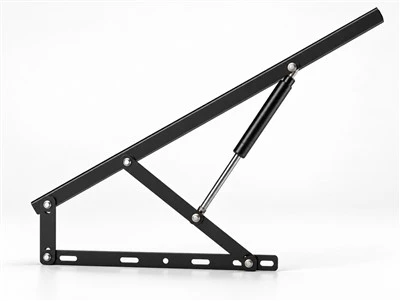
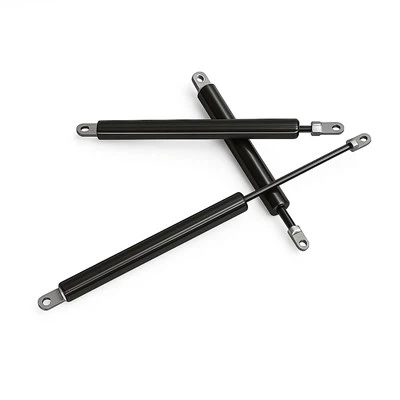
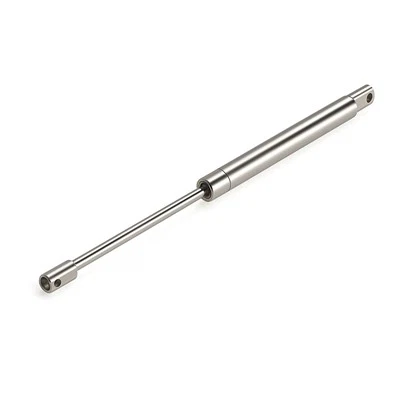
1. What Is an Inter-Stop Gas Spring
An inter-stop gas spring can be understood as a gas spring that can hold in multiple positions
It does not stop only at the fully open or fully closed position
It can also allow an arm, screen, or platform to stay at a suitable position somewhere in between
Common types include compression, tension, and designs with internal guiding and friction structures
Some solutions rely on internal friction to achieve position holding
Unlike standard motion-assist gas springs, this type places more emphasis on staying in position
In many cases, it can provide stable holding without requiring an extra mechanical lock or clamp
2. Why Position Holding Matters for Ergonomic Workstations and Monitor Arms
Users frequently adjust monitor height and viewing distance
They also change screen angle to reduce glare
Multi-screen side-by-side or stacked setups place higher demands on stability
If the arm cannot hold position well, users have to adjust it repeatedly
Stable position holding helps different users quickly find the right viewing angle
For heavier monitors or dual-screen structures, it helps reduce drift and sagging
On sit-stand workstations, it can also help the monitor track or platform stay stable at multiple height positions
It is better suited to creating a direct and user-friendly ergonomic adjustment experience
3. Key Technical Points to Check When Choosing an Inter-Stop Gas Spring
3.1 Load, Center of Gravity, and Torque
First confirm the actual weight of the monitor or platform
Also include the added weight of brackets, accessories, and other attached parts
Pay attention to the position of the center of gravity relative to the pivot point
Define the range of movement the arm needs, such as tilt, rotation, or lift
These factors directly affect the required force range
When the selection is correct, the arm will feel closer to "easy to move, but able to stay in place"
This is also an important foundation for one-hand adjustment
3.2 Stroke, Angle, and Multi-Position Holding Performance
The stroke of the gas spring must match the lifting or rotational range of the arm
Compact hinge positions usually require shorter stroke solutions
Structures with larger height adjustment ranges usually require longer stroke solutions
Different internal designs affect holding performance
Some solutions provide smoother holding across the full stroke
Others offer stronger holding force in certain parts of the range
They also affect how light or firm the arm feels during movement
Internal friction and damping adjustment directly influence the overall user feel
3.3 Damping and User Comfort
Many ergonomic products need more than just the ability to hold position
They also require better control over movement speed
With added damping, the risk of sudden dropping when the user releases the arm can be reduced
It can also reduce rebound at the top or bottom of the stroke
The movement feels smoother and better suited to premium office equipment
This is especially important for heavier monitors or setups with added accessories such as lights and cameras
Proper damping design can also reduce noise and make adjustment quieter
3.4 Surface Finish, Corrosion Resistance, and Appearance
These products are commonly used in offices, trading floors, medical environments, and control rooms
In addition to function, appearance is also important
Black nitrided surfaces are popular because they have lower visual reflection and blend more easily with monitor arm designs
They also provide good everyday corrosion resistance and durability
In addition to black, white, silver, or other finishes may also be chosen to match the overall design
For monitor arm systems, good surface treatment affects not only service life but also the overall quality feel
4. How Land Gas Springs Supports Ergonomic OEMs and Monitor Arm Manufacturers
Compression and tension inter-stop gas springs can be provided for different arm structures
Position-holding performance can be adjusted according to the mechanism's torque curve
Adjustable-force options can be provided during prototype and small-batch stages
Support is available for monitor arm and workstation projects of different sizes and structures
OEM logo printing and custom packaging can also be supported
This is more suitable for customers who need customization, long-term supply, and engineering support
The focus is not only on supplying parts, but also on helping customers match movement performance with arm structure more effectively
5. A Quick Specification Checklist for Your Next Ergonomic Project
What is the application type
Is it a single-monitor arm, dual-monitor arm, wall-mounted arm, or sit-stand workstation
What is the load range
Confirm the minimum and maximum weight after including the monitor, bracket, and accessories
What is the required movement range
This includes lift range, tilt angle, and other motion requirements
What kind of operating feel is expected
Should it feel light for fingertip adjustment, or more solid and resistant
What are the environment and appearance requirements
For example, office, medical, or industrial control room use, and the related color and surface finish requirements
The more complete this basic information is, the more efficient the later selection and customization process will be
6. Conclusion
The main value of an inter-stop gas spring is not just motion assistance
More importantly, it allows the arm or workstation to stay stable at multiple positions
For monitor arms and ergonomic workstations, this directly affects the user experience
The right solution can make adjustment easier, smoother, and more refined
Selection should consider load, center of gravity, stroke, damping, appearance, and use environment together
The better these factors are matched, the higher the final product reliability and user satisfaction will usually be