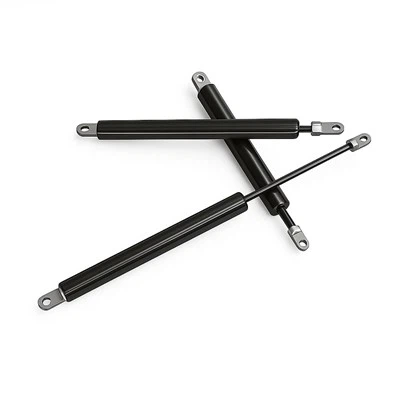
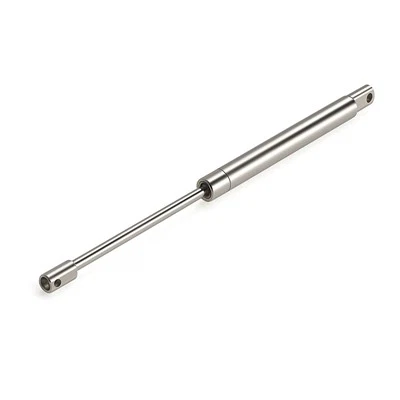
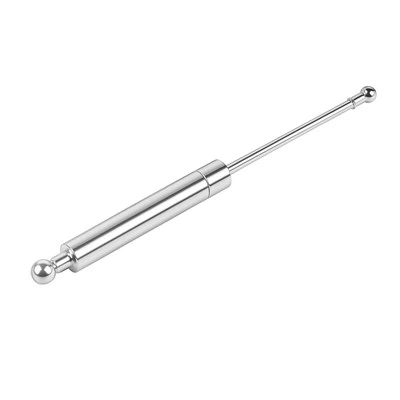
This article introduces the technology of gas springs used in yacht deck lockers and hatches, focusing on selection points, performance requirements, and corrosion-resistant design for marine environments.
1. Application of Gas Springs in Yacht Hatches
Many modern yachts have deck hatches that need to be opened, such as storage compartment hatches and lifeboat hatches. Without proper support, hatches may close suddenly or be difficult to open. Using gas springs ensures that the opening and closing of the hatch is smooth and safe.
2. Performance Selection and Design
When selecting gas springs, precise calculations are needed based on the hatch's weight, center of gravity, opening angle, and support point installation. Proper design ensures that the hatch can be easily supported when opened and smoothly returns to its position when closed, avoiding excessive wear or damage.
3. Corrosion-Resistant Design
Yacht environments are filled with saltwater and UV rays, so gas springs must have high corrosion resistance. Using 316 stainless steel effectively resists salt spray corrosion while matching the appearance of the boat. Additionally, gas springs with coatings or mixed materials offer a balance between cost and performance to meet marine environment demands.
4. Motion Control and Safety
Gas springs are not only used to support hatches but also control the speed of opening and closing, preventing sudden closure or bouncing. Adding damping or hydraulic cushioning devices ensures smooth operation, improving safety during use.
5. OEM Technical Support
When collaborating with yacht builders, manufacturers typically provide technical support, including force calculations, CAD models, prototype validation, and corrosion resistance testing, to help shipyards design efficient and high-quality gas spring systems.