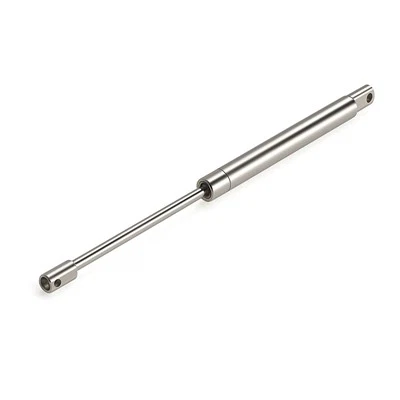
Adjusting chest lid stay gas struts is a task that requires a certain level of knowledge and precision. As a supplier of Chest Lid Stay Gas Struts, I'm here to guide you through the process, ensuring that you can make the most of these essential components.
Understanding Chest Lid Stay Gas Struts
Before we delve into the adjustment process, it's crucial to understand what chest lid stay gas struts are and how they work. These gas struts are mechanical devices that use compressed gas to provide a controlled force. They are commonly used to support the weight of chest lids, making it easier to open and close them. The gas inside the strut is under pressure, and when the lid is opened or closed, the gas is compressed or expanded, providing the necessary force.
The main components of a chest lid stay gas strut include a cylinder, a piston rod, and a seal. The cylinder contains the compressed gas, while the piston rod moves in and out of the cylinder as the lid is opened or closed. The seal ensures that the gas remains inside the cylinder, maintaining the pressure.


Tools Required for Adjustment
To adjust chest lid stay gas struts, you'll need a few basic tools. These include a socket wrench set, pliers, a screwdriver, and a ruler. The socket wrench set will be used to remove and install the nuts and bolts that hold the gas strut in place. Pliers can be useful for gripping small components, while a screwdriver may be needed to adjust any screws on the lid or the mounting brackets. A ruler is essential for measuring the length of the gas strut and ensuring that it is adjusted to the correct position.
Step-by-Step Adjustment Process
- Safety First: Before you start any work on the chest lid stay gas struts, make sure the chest is empty and the lid is in the closed position. This will prevent any accidents or injuries.
- Locate the Gas Struts: Identify the gas struts on your chest lid. They are usually located on either side of the lid, near the hinges.
- Remove the Gas Struts: Use the socket wrench set to remove the nuts and bolts that hold the gas struts in place. Be careful not to damage the mounting brackets or the gas struts themselves.
- Measure the Gas Struts: Use the ruler to measure the length of the gas struts. This will help you determine if they need to be adjusted.
- Adjust the Gas Struts: If the gas struts are too long or too short, you can adjust them by turning the adjustment valve. This valve is usually located at the end of the gas strut. Use a small screwdriver to turn the valve clockwise to increase the pressure and counterclockwise to decrease the pressure.
- Reinstall the Gas Struts: Once you have adjusted the gas struts to the correct length, reinstall them on the chest lid. Make sure the nuts and bolts are tightened securely.
- Test the Chest Lid: Open and close the chest lid several times to make sure the gas struts are working properly. If the lid is still difficult to open or close, you may need to make further adjustments.
Common Problems and Solutions
- Gas Strut Not Providing Enough Force: If the gas strut is not providing enough force to support the weight of the chest lid, you may need to increase the pressure. This can be done by turning the adjustment valve clockwise.
- Gas Strut Leaking: If the gas strut is leaking, it may be damaged. In this case, you will need to replace the gas strut. You can find replacement gas struts on our website.
- Lid Not Closing Properly: If the lid is not closing properly, it may be due to misaligned gas struts. Check the mounting brackets to make sure they are properly aligned and tighten any loose bolts.
Other Applications of Gas Struts
In addition to chest lid stay gas struts, we also offer a wide range of gas struts for other applications. For example, our Pickup Tonneau Cover and Camper Shell Gas Struts are designed to provide smooth and reliable operation for pickup truck tonneau covers and camper shells. Our Machine Arm and Pad Positioning Gas Springs are used in industrial applications to provide precise positioning and support. And our Sofa Recliner Assist Gas Springs are perfect for enhancing the comfort and functionality of sofa recliners.
Conclusion
Adjusting chest lid stay gas struts is a relatively simple process that can significantly improve the performance of your chest lid. By following the steps outlined in this guide and using the right tools, you can ensure that your gas struts are adjusted correctly and working effectively. As a supplier of Chest Lid Stay Gas Struts, we are committed to providing high-quality products and excellent customer service. If you have any questions or need further assistance, please don't hesitate to contact us. We look forward to helping you with your gas strut needs.
References
- Standard texts on mechanical engineering principles related to gas struts.
- Manufacturer's guides for chest lid stay gas struts.