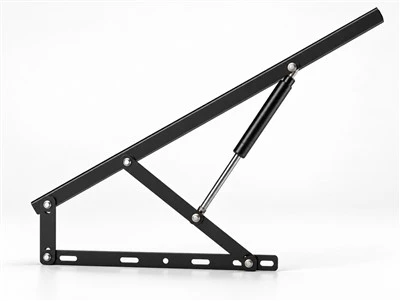
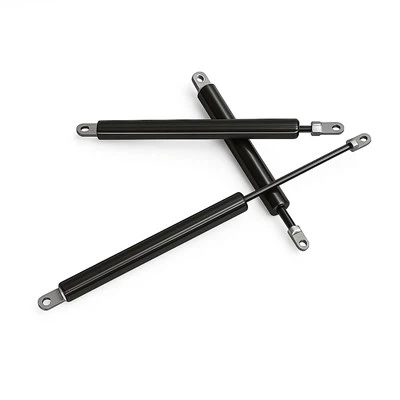
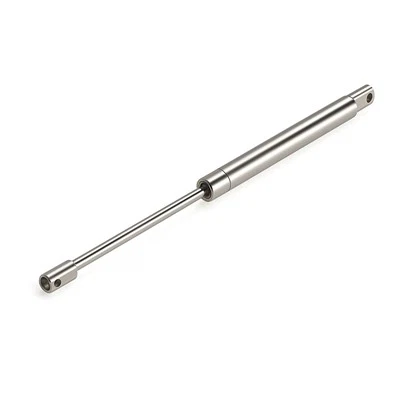
When a riding mower hood slams shut or a cutting deck feels impossibly heavy to lift, the problem is often hidden inside the riding mower hood lift gas springs or riding mower deck lift gas struts. Over time, these small components lose pressure, making routine maintenance harder and less safe.
For homeowners, landscapers, and small contractors, choosing the right riding mower hood and deck lift gas springs as aftermarket replacements can restore smooth, controlled motion to lawn tractors and zero-turn mowers.
Image suggestion 1: Lawn tractor parked on a driveway with hood open and two gas springs visible on each side of the hood.
1. What Hood and Deck Lift Gas Springs Actually Do
On lawn tractors and zero-turn mowers, gas springs are typically used in two main areas:
- Hood and bonnet gas springs for mowers – supporting the engine hood or bonnet
- Lawn mower deck lift supports – assisting the lift mechanism for the cutting deck
These components may be described as:
- Tractor mower hood gas shocks
- Gas props for mower hoods or pneumatic struts for mower hoods
- Gas lift struts for mower decks and gas lift cylinders for riding mowers
Their job is to:
- Reduce the effort needed to open the hood or raise the deck
- Hold the hood or deck in the open position for maintenance
- Control movement so panels don't slam down or bounce
Most are compression gas springs for lawn tractors, filled with nitrogen gas and a small amount of oil, sometimes combined with gas dampers for mower decks or hydraulic dampers for mower lift for smoother motion.
Image suggestion 2: Simple diagram showing a mower hood, hinge, and gas spring with arrows indicating lift and support.
2. Signs Your Mower Gas Springs Need Replacement
Before you start measuring and buying, you need to confirm that your existing gas springs are failing. Typical symptoms include:
- Hood no longer stays fully open
- Deck feels much heavier to lift than it used to
- Hood or deck drops quickly instead of moving smoothly
- Visible oil leakage or corrosion on the rod of the gas spring
If you see these signs, it's time to look for replacement heavy duty mower gas springs or equivalent non-locking mower gas springs that match your original design.
3. Step-by-Step Sizing Guide for Replacement Gas Springs
3.1 Measure Length and Stroke
The first step in choosing new riding mower hood lift gas springs or riding mower deck lift gas struts is getting accurate dimensions.
1.Extended length
- Open the hood or deck to the normal service position.
- Measure from the center of one mounting point (ball stud or bracket) to the center of the other.
- This is your extended length.
2.Compressed length / stroke
- Remove one of the old gas springs (support the hood/deck safely first).
- Compress it fully and measure between mounting centers to get compressed length.
- Stroke = extended length − compressed length.
This information will help you select replacement gas lift cylinders for riding mowers with the correct dimensions.
Image suggestion 3: Close-up photo with a tape measure showing how to measure center-to-center length of a mower hood gas spring.
3.2 Selecting the Right Force
Force is what determines how heavy the hood or deck feels:
- Too low: hood or deck won't stay up.
- Too high: difficult to close or pops open aggressively.
You can:
- Look for a force rating printed on the old tractor mower hood gas shocks (often in Newtons, e.g., 300N).
- If no marking is visible, work with an engineering supplier to estimate required force based on hood/deck weight and mounting geometry.
For heavier commercial mowers or attachments, heavy duty mower gas springs may be required. During development or custom upgrades, adjustable force mower gas struts are helpful; they can be carefully de-gassed to tune the feel before finalizing a fixed-force specification.
4. Choosing Finish, Material, and Damping Options
4.1 Finish and Corrosion Resistance
Mowers operate in grass, moisture, and fertilizer residue-conditions that can be hard on steel parts. For long service life consider:
- Black nitrided mower gas struts for improved corrosion resistance on exposed rods
- High-quality coatings on cylinders and end fittings for outdoor storage
These features are especially important for landscapers and contractors who use riding mowers daily and often store them outdoors.
4.2 Damping and Motion Control
If you want smoother motion, especially on deck lifts, you can add:
- Gas dampers for mower decks or hydraulic dampers for mower lift in combination with standard nitrogen gas springs for riding mowers
This combination can reduce bounce, protect hinges and linkages, and make height adjustments feel more controlled.
5. Installation Tips and Safety Notes
Once you've chosen your replacement riding mower deck lift gas struts and gas props for mower hoods, follow these basic guidelines:
1.Work safely
- Support the hood or deck securely with a prop or stand before removing old springs.
- Avoid placing any part of your body under unsupported parts.
2.Replace in pairs
- If two gas springs work together (one on each side), replace both, even if only one has failed.
- This ensures balanced support and avoids twisting or uneven loading.
3.Match end fittings
- Check whether your mower uses ball studs, eyelets, or brackets.
- Make sure new gas lift struts for mower decks come with compatible end fittings or adapters.
4.Check full range of motion
- After installation, slowly open and close the hood and deck several times.
- Confirm there is no interference, and that stay supports for mower hoods or any additional safety props still engage correctly.
5.Choose non-locking vs. block-lift
- For most lawn tractors, non-locking mower gas springs are sufficient.
- In some custom or commercial setups, block-lift gas struts for decks can help hold a deck at intermediate heights.
Image suggestion 4: Step-by-step photo sequence: removing old gas spring, snapping new gas spring onto the ball studs, and testing hood movement.
6. Why Source Riding Mower Gas Springs from Land Gas Springs
As an OEM manufacturer, Land Gas Springs supplies gas springs and dampers to a wide range of industries, including lawn and garden equipment. For riding mowers, lawn tractors, and zero-turn mowers, we offer:
- Tailored riding mower hood lift gas springs and hood and bonnet gas springs for mowers
- Riding mower deck lift gas struts, lawn mower deck lift supports, and gas lift struts for mower decks for various deck sizes and lift mechanisms
- Compression gas springs for lawn tractors, pneumatic struts for mower hoods, and nitrogen gas springs for riding mowers with custom stroke and force options
- Corrosion-resistant black nitrided mower gas struts for demanding outdoor conditions
- Engineering support to help you match or upgrade existing parts from OEM references
On your website, these can be grouped into categories such as "Riding Mower Hood Gas Springs Series" and "Deck Lift Gas Struts for Lawn Tractors and Zero-Turn Mowers," with this article linking to those product pages for strong long-tail search coverage.
7. Get Catalogs, Design Support, and Pricing for Your Mower Projects
If you are a mower dealer, aftermarket parts distributor, or equipment manufacturer looking to standardize riding mower hood and deck lift gas springs, Land Gas Springs can help you match existing parts and optimize new designs.
Contact us at info@lgassprings.com to get a detailed catalog, request professional design drawings for your riding mower hood and deck lift projects, or discuss preferential pricing as an OEM or aftermarket partner with Land Gas Springs.