1. Why Medical Instrument Arms Need Precise Positioning
Arm systems must do more than simply move; they must move smoothly
If a monitor arm sags easily, staff need to adjust it repeatedly
If a larger equipment boom does not move smoothly, it can affect the working space around the patient
Precise positioning helps improve workflow efficiency
Stable support helps improve the overall user experience
A suitable gas spring solution allows equipment to move more easily
At the same time, it helps maintain good control
2. Common Applications of Gas Springs in Medical Equipment
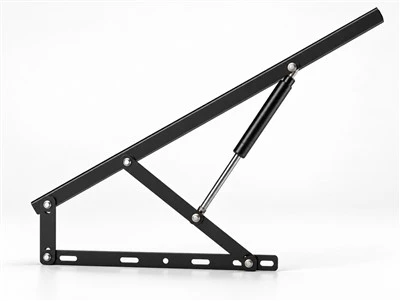
Medical instrument arms
Monitor arms
Camera support arms
Ceiling-mounted equipment or pendant systems
Medical carts
Lift-up work surfaces on equipment carts
Flip-up covers
Support for opening storage compartments
In some cases, dampers are also used together with gas springs
The main purpose is to improve motion performance and increase safety
3. Key Parameters to Consider During Design
Total weight of the equipment itself
Additional weight from cables, brackets, and accessories
Length of the arm
Pivot point location
Gas spring mounting point location
Whether the equipment needs to stay in any chosen position
Whether it should move with only a small amount of force
Whether some damping feel is preferred
Force and stroke should be determined based on these conditions
4. Why Fine Adjustment Is Often Needed During Development
The "feel" of the arm is very important in actual use
Many projects use adjustable-force solutions during the development stage
The gas spring is often charged with a higher pressure first
Then the force is gradually reduced to find the most suitable range
Once the ideal force is confirmed, it becomes the mass production standard
This method works well for instrument arm projects
It is also useful for medical carts and equipment carts
It is especially helpful when the load may change during use
5. Damping, Safety, and Ease of Use Are Equally Important
It is not enough to simply make sure the arm can be supported
The movement also needs to feel smooth and controlled
Soft-close dampers can help prevent the arm from hitting the end position too quickly
Hydraulic dampers are suitable for controlling the lowering speed of heavier platforms or covers
Sudden movement in ceiling-mounted or wall-mounted equipment can create risk
Cable pull can also affect movement stability
Combining support and damping helps reduce sudden motion
This can improve confidence for doctors and nursing staff during use
6. Material Choice Also Affects Hygiene and Durability
Medical environments place higher demands on materials
Equipment is often exposed to cleaning agents
It also needs to meet hygiene requirements
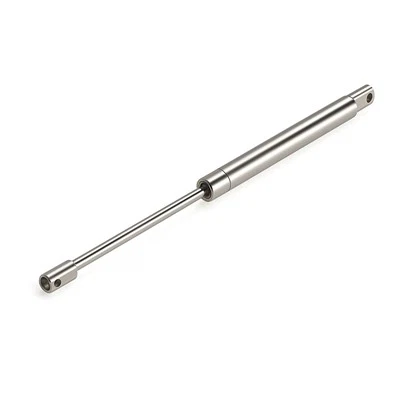
Stainless steel is suitable for exposed parts that require frequent cleaning
It offers both corrosion resistance and easy cleaning
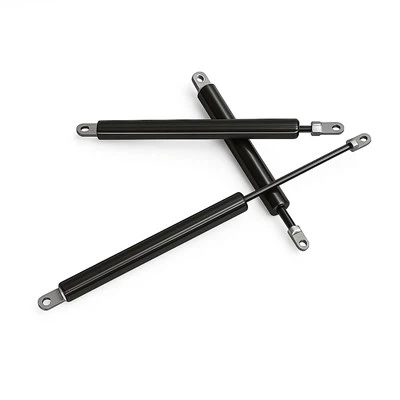
Black nitrided finishes provide wear resistance, corrosion protection, and appearance consistency
They are suitable for internal installation positions
They are also useful where reduced reflection is important
Different material options can match different equipment environments and design needs
7. Design Support for Medical Instrument Arm Projects
The service is not limited to supplying a single part
It can also include support from design through validation
Gas spring solutions can be provided for instrument arms, monitor arms, and medical carts
Matching can be based on the size and structure of the equipment
Force, stroke, and materials can be customized
2D / 3D CAD models can be provided
Technical documentation can also be provided
This helps customers complete design verification more efficiently
It can also reduce repeated adjustments during development
8. Conclusion
A gas spring is not just a simple support component
It directly affects whether the equipment feels stable
It also affects safety and ease of operation
The right gas spring, adjustable positioning solution, and damping control all influence the professional feel of the equipment
They also affect the overall quality impression
If load, structure, movement requirements, hygiene conditions, and durability are considered early in design
The final product will usually perform more reliably in real use