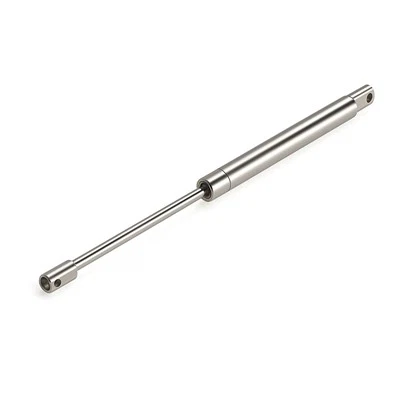
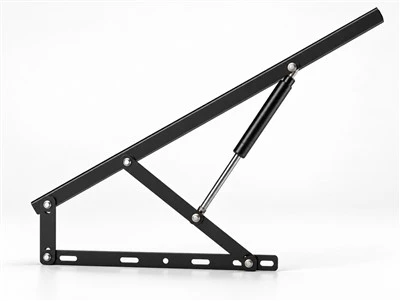
Let's cut to the chase: if you've ever struggled to prop open a giant, heavy yacht lid at 3 a.m. in a storm-or spent 10 minutes fighting to get it back closed after grabbing a spare anchor or diving gear-you've probably wondered if there's a better way. As a guy who's been supplying Yacht Boat Lid Gas Springs for years, I get this question ALL the time: Are there gas springs specifically built for large yacht boat lids? Short answer? YES-and no, you can't just grab the struts from your neighbor's pickup truck to make it work. Let me break this down like I would to a captain who's already had one too many bad boat part fails.
First, let's talk about why regular gas springs just don't cut it for yachts. A standard boat lid (think: a deck hatch, engine compartment cover, or that big storage panel that holds your jet skis) isn't like your car trunk. For one thing, yachts get tossed around-hard. Saltwater's a silent killer too; it eats through cheap metal and seals way faster than you'd think. A standard gas spring designed for, say, a car trunk or even a home ottoman isn't built to handle constant salt spray, extreme humidity, and the constant stress of a lid that might weigh 100+ pounds, not the 20 pounds of pillows in your living room. I once had a customer bring me a set of cheap imported struts he'd bolted on his 50-foot sailboat's engine hatch-they lasted exactly two weeks before seizing up so bad he had to call a marina to pry the hatch open in the middle of the Atlantic. Ouch.
So what makes yacht-specific gas springs different? Let's start with the build quality. Unlike the generic struts you can grab at a hardware store, yacht-rated springs are made with corrosion-resistant materials-think 316 stainless steel for the piston rod and body, which is the same stuff used on boat props because it doesn't rust in saltwater. The seals are also heavy-duty marine-grade rubber, not the flimsy stuff that dries out after a few months of sun and salt. I once tested a set of our springs vs. a generic one by leaving them submerged in a saltwater tank for 90 days-our springs still moved smoothly, the generic one was locked solid. That's non-negotiable for marine use.
Next, the load capacity and force calibration. A large yacht lid isn't a one-size-fits-all situation. A small dayboat's hatch might only need 50 pounds of lift, but a 100-foot superyacht's engine cover? That could be 300+ pounds. And it's not just about lifting it-you need it to stay where you put it. If you're working on your engine, you don't want the lid to crash down on your hands (I've seen that, it's not pretty). Yacht-specific gas springs are calibrated to hold a specific, consistent force through their entire stroke-so from fully closed to fully open, the lift stays steady, no jerky movements or sudden drops. Generic springs often have uneven force, which works for a car trunk but is a disaster on a 6-foot-tall yacht lid you have to reach over.


Also, let's talk about the environment. Yachts don't live in your garage. They're out in the sun, in extreme temperatures-from 100°F in the Caribbean to freezing in the Mediterranean. That means the gas inside the spring (usually nitrogen, by the way) has to be stable through big temperature swings. Generic springs might leak gas when it gets hot, making them weak, or get too stiff when it's cold. Our yacht gas springs are pressure-tested to handle these fluctuations, so you don't have to worry about your lid suddenly slamming shut when you're in the middle of a race or a calm sunset cruise.
Wait, but I know what some of you are thinking: "I used struts from [some random site] for my ottoman, and they worked fine-can't I just modify them?" No, because a heavy-duty ottoman bed lift mechanism is for indoor use, where there's no salt, no constant temperature shifts, and no need to hold 200 pounds for hours. Even if you bolt them on, their seals will rot in saltwater in months. It's not worth the risk of a lid failing mid-cruise-ask the captain I mentioned earlier, he spent $2,000 on a marina tow instead of the $500 for the right springs. Same goes for Murphy bed gas springs, which are built for indoor walls and don't have the corrosion resistance or marine calibration. Don't even get me started on bonnet gas struts for cars-they're for lightweight hoods, not 200-pound yacht hatches.
Now, let's get specific about what yacht lid gas springs are designed to do beyond just lifting. A lot of large yacht lids are big, awkward, and sometimes have to be accessed one-handed (like if you're holding a flashlight while checking your bilge). So many of our springs have a "slow close" feature too-you push the lid down, and it glides gently shut without slamming, which is better for the lid itself and for your fingers. Some even have a locking function, so you can prop the lid open all day while working, no need to hold it up or use a flimsy stick. That's something you won't find on standard industrial or home struts.
I've also seen guys try to use trunk lift supports tailgate gas struts from a truck, but truck tailgates move differently-they pivot at the bottom, while yacht lids usually pivot at the top or side, so the force angle is totally different. That changes everything for how the spring applies pressure, and you'll end up with a lid that won't stay open or won't lift at all. And don't even think about wardrobe lift rail gas springs-those are for holding up light closet panels, not heavy marine lids. Each of these is built for a specific use case, and marine lids are a unique, demanding category.
So, who actually needs these? It's not just superyacht owners-small boat captains too. If you have a 30-foot fishing boat with a big tackle storage lid, a sailboat with a companionway hatch that's hard to lift, or a center console with an engine cover that's a pain to prop open while you're reeling in a big catch, yacht-specific gas springs are a game-changer. I've had customers tell me they'd give up their morning coffee just to not fight their lid anymore. That's the real win here-making boat maintenance or access less of a chore, and more of the fun part of being on the water.
Now, let's talk about installation. The good news is that most yacht gas springs are designed to be a direct replacement for old, broken ones-you just measure the length of the old spring (from center to center of the mounting points), check the load rating, and swap them out. No fancy welding or custom drilling needed, though I always recommend having a marine tech help if you're not comfortable working with heavy parts and tools. Our team has guides for measuring, too, so you don't order the wrong size.
I know cost is a factor, but here's the thing: cheap generic struts might save you $100 upfront, but if they fail and damage your yacht lid, or cause an injury, that's way more expensive. And you'll be replacing them every 6 months to a year, instead of the 5-10 years you'll get from a quality marine gas spring. I've had customers tell me their set of our springs is still going strong after 8 years, even on a boat that's in the water 12 months a year. That's a no-brainer.
Wait, another common question: can you customize these for weirdly sized lids? Absolutely. A lot of yachts have custom deck designs, so we work with captains and marine designers to build springs that fit their exact lid size, load, and mounting needs. Whether you have a curved lid, a lid that opens sideways, or something that's extra heavy, we can calibrate the force to make it work smoothly. No one-size-fits-all for custom yacht builds.
At the end of the day, the last thing you want when you're out on the water is a broken part that ruins your day. Whether you're prepping for a weekend trip, doing maintenance, or just trying to get to your cooler of beer, your lid should work when you need it. Generic gas springs aren't built for the marine environment's unique challenges-salt, humidity, temperature swings, heavy loads. Yacht-specific gas springs are.
If you're dealing with a stuck, wobbly, or just plain annoying yacht lid and you're tired of generic parts that don't last, let's talk. I've helped dozens of captains swap out bad struts for ones that work, and I can help you figure out exactly what you need for your boat. No pressure, just straight talk about parts that actually work for your yacht.
References
- Marine Industry Corrosion Resistance Standards, National Marine Manufacturers Association (NMMA), 2022
- Gas Spring Load Calibration for Large Access Panels, Journal of Marine Engineering and Technology, Vol. 18, No. 3, 2021
- Environmental Performance Testing of Gas Springs for Marine Applications, International Organization for Standardization (ISO) 12215-5, 2020
- Marine Deck Hatch Accessibility and Safety Guidelines, U.S. Coast Guard Auxiliary, 2023
- Load Force Dynamics for Pivoting Lid Systems, Society of Automotive Engineers (SAE) International, 2022