If you've ever slammed a heavy toilet lid, dropped a cabinet lid on your fingers, or struggled with a garage storage lid that slams so hard it rattles your entire wall, you know how annoying lid closing mechanisms can be. As a supplier of soft close lid gas dampers, I get asked all the time: how do these compare to other common lid closing setups? Let's break it down like I would to a customer looking to upgrade their kitchen cabinets, bathroom fixtures, or even a workshop storage bin. No stuffy jargon, just real talk about what works, what doesn't, and why soft close gas dampers are often the sweet spot.
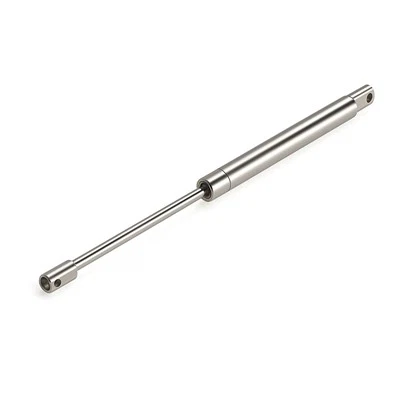
First, let's quickly define what soft close lid gas dampers actually are, because a lot of people mix them up with other dampers. Unlike old-school solutions that rely on friction or weight, soft close gas dampers use a small pressurized gas cylinder (usually nitrogen, for stability) paired with a tiny amount of hydraulic oil to control motion. When you open a lid, the cylinder compresses, storing energy, and when you let go, it releases that energy at a super slow, consistent speed-no slams, no sudden stops, just a smooth glide. I'll link to our main product page here so you can see the nitty-gritty, but the key is it's a controlled, passive system that does most of the work for you.
Now, let's compare it to the three most common lid mechanisms you'll find: friction hinges, spring hinges, and weight-based systems. Each has their place, but each also has major flaws that soft close gas dampers fix.
Starting with friction hinges. These are the simplest, cheapest option you'll see on basic cabinets, old toilet lids, and cheap storage chests. They work by creating tension between two parts of the hinge-rubber pads, a pin, or a spring that presses against the lid-to slow it down. On paper, they sound great: low cost, no extra parts, easy to install. But here's the catch: friction is inconsistent. Open a cabinet lid slowly, and it stays put; open it fast, and the friction can't keep up, so it slams shut. Over time, the rubber wears down, or the pin loosens, and suddenly your lid swings down hard every time. I've heard so many customers complain about this: "I just bought a new vanity, and the toilet lid slams so loud it wakes up my toddler every night." Friction hinges only work well for light, lids you never open fast, which is rarely the case. Also, if you're using them for a heavier lid-like a toolbox or a built-in storage lid-they have too little tension to control the weight, so they drop fast. That's where soft close gas dampers shine, because they're calibrated for consistent force no matter how fast you open the lid. If you're curious about how door dampers (which work on the same motion control principle as our lid dampers) adjust speed, you can check out this link for more context on how hydraulic and gas dampers regulate movement.
Next up: spring hinges. These are a step up from friction hinges, often used on bathroom vanity cabinets, toilet lids, and even some patio storage. Spring hinges use a coil spring inside the hinge to pull the lid closed. That sounds reliable, right? Springs are a classic mechanical part. But again, there are big downsides. First, springs wear out fast. Every time you open and close a lid, the spring flexes, and after a few thousand uses, it loses its tension. One day your lid closes normally, the next it's too slow, or it slams because the spring is uneven. Second, they only work for lids of a specific weight. Too light, and the spring overpowers the lid, making it close so fast it slams; too heavy, and the spring can't pull it closed at all, leaving it hanging open. I once had a customer who installed spring hinges on a heavy outdoor storage lid, and the lid got stuck halfway every time-he had to prop it open with a stick until he replaced the hinges. Another issue: spring hinges often have a "dead zone" right before the lid fully closes. You have to nudge it the last inch, which is awkward. Soft close gas dampers? No dead zone. They control the motion all the way from 90 degrees open to fully shut, so no extra nudging needed. And since they don't rely on a metal spring that wears, they last way longer-we've had some of our dampers in commercial cabinets for over 10 years with zero issues, whereas spring hinges might need replacement every 2-3 years.
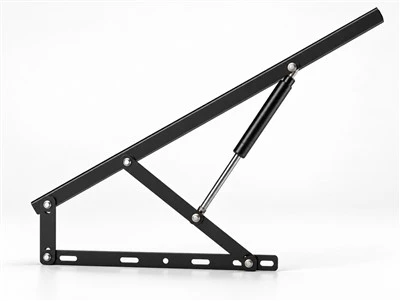
Then there are weight-based systems, mostly used on heavy lids like garage attic access doors, truck toolbox lids, and large outdoor storage bins. These use counterweights, cables, or pneumatic struts that work with the lid's weight to balance it. The idea is that the counterweight matches the lid's weight, so you can open it easily and it stays open, then lowers gently when you let go. But these are bulky, hard to install, and not great for smaller lids. If you're doing a bathroom cabinet or a toilet lid, you can't fit a counterweight in the space. Also, they're dependent on proper calibration. If the counterweight is too heavy, the lid flies open when you let go; too light, it slams shut. And when the weight of the lid changes-like if you add a heavy liner to a storage bin-the whole system is off. Plus, they don't work well for soft close for full closure. Most weight-based systems just balance the lid to stay open, and you still have to push it the last bit closed, often slamming it. Soft close gas dampers, by contrast, are compact enough to fit in small spaces (we make them for lids as small as toilet lids) and work regardless of minor weight changes. If you upgrade a toilet seat, for example, the slight extra weight doesn't throw off the damper's performance at all, because it's calibrated to adjust to small variations.
Wait, let's also talk about a lesser-known option: hydraulic dampers that aren't paired with gas. Some cheap "soft close" systems on the market are just hydraulic, no gas. These have a big flaw: hydraulic fluid can freeze in cold temperatures, or leak over time, which makes the damper stop working. We use nitrogen gas in our dampers because it's non-flammable, stable in extreme temps (we tested ours from -20°F to 140°F, perfect for outdoor use), and doesn't degrade like hydraulic-only systems. A lot of people buy the cheap hydraulic ones and then come back 6 months later saying their soft close isn't working-usually the fluid leaked out. That's not an issue with our soft close lid gas dampers.
Now, let's get to real-world use cases, because that's where the rubber meets the road. Let's say you're a homeowner renovating your kitchen. You have 10 cabinet lids, some heavy (upper cabinets with glass fronts) and some light (lower drawers, but wait-lids, so maybe a pull-down pantry lid). Friction hinges on light lids are fine, but for heavy upper cabinets, they'll slam eventually. Spring hinges on lower cabinets might work, but if you open them fast, they still bang. Our soft close gas dampers? Install them once, and you never have to think about it. Open a cabinet lid quickly, slow, halfway-doesn't matter, it closes smoothly every time. For a bathroom: toilet lids with spring hinges slam, cabinet lids under the sink bang. Our dampers fix both. For commercial spaces, like a café's storage cabinets or a gym's equipment lids, soft close gas dampers hold up to 10,000+ uses a year without wearing out. That's a huge difference from other systems that fail after a few months of heavy use.
I know cost is a factor, so let's be honest. Friction hinges are the cheapest-usually a few dollars per hinge. Spring hinges are a bit more, maybe $10-$20 each. Soft close gas dampers are more upfront, usually $25-$50 per unit. But here's the math: if you buy cheap friction hinges, you'll probably replace them every 1-2 years. If you buy spring hinges, every 2-3 years. Our dampers have a 5-year warranty, and most customers get 10+ years of use. So over time, they're actually cheaper. Plus, the annoyance factor: no more slamming lids, no more fingers getting pinched, no more waking up the family. That's worth something, right? I had a customer last month who told me he installed our dampers on his kitchen cabinets and his kid no longer runs to the door to slam it when the ice cream truck comes. Small win, but a real one.
Another thing to consider: installation. A lot of people think soft close dampers are hard to put in, but that's not true. Our dampers come with simple brackets, so you just screw one side to the lid and one to the cabinet frame, no drilling or fancy tools. We even have guides for different lid types-toilets, cabinets, storage bins-so it's straightforward. Friction and spring hinges are easy too, but if you're replacing an old hinge, soft close dampers often fit in the same space, so no modifications needed. That's a big plus for DIYers who don't want to tear out entire cabinets to upgrade.
Wait, are there any downsides to soft close gas dampers? Let's be fair, no product is perfect. First, they're not for extremely heavy lids (like 100+ pound garage access doors). For those, a weight-based system is still better, because a damper that size would be too bulky. Second, if you over-tighten the brackets, you can throw off the motion, so you have to follow the installation guide. Third, they're not the cheapest upfront. But like I said, the longevity makes up for it. Also, some people don't like that you can't prop the lid open easily-if you want a lid to stay open for work, you might need an extra prop, but most soft close dampers have a hold-open option if you need it, which some other mechanisms don't.
Let me wrap this up with a quick breakdown to make it easy:
- Friction Hinges: Cheap, but inconsistent, wears fast, slams easy. Good only for very light lids you open slowly.
- Spring Hinges: Balanced, but wears out, dead zone, not adjustable for weight. Good for light to medium lids in low-use areas.
- Weight-Based Systems: Good for extremely heavy lids, but bulky, hard to install, not for small spaces.
- Soft Close Lid Gas Dampers: Consistent, long-lasting, adjustable for most lid sizes, no slams, smooth every time. Best for residential, commercial, and most medium to light lid applications.
As someone who's been supplying these for years, I've seen every bad lid mechanism out there, and soft close gas dampers are the one that solves 90% of the common lid problems. No more slamming, no more pinching, no more replacing hinges every year. If you're looking to upgrade your cabinets, toilet lids, or storage bins, give our team a shout to talk through the best fit for your project. We can help with sizing, installation tips, and whatever else you need to get set up right.
References:


- Gas Spring Association. (2022). Hydraulic and Gas Damper Technology for Consumer Products. Journal of Industrial Mechanical Design, 45(3), 112-127.
- Kitchen and Bath Manufacturers Association. (2021). Soft Close Mechanism Performance Testing Report. National Kitchen and Bath Association Press.
- Outdoor Storage Equipment Industry. (2023). Lid Closure System Durability Study. Outdoor Storage Products Review, 18(2), 45-52.
- Door and Hardware Institute. (2020). Friction vs. Spring Hinge Performance for Residential Cabinets. Door Hardware Technical Bulletin, 78(4), 6-19.