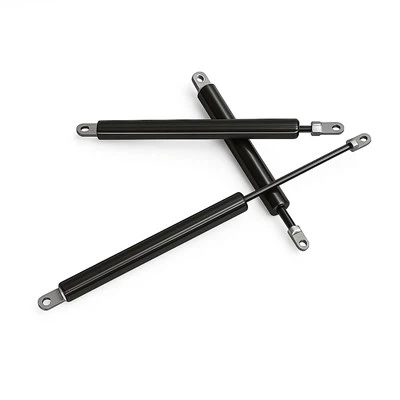
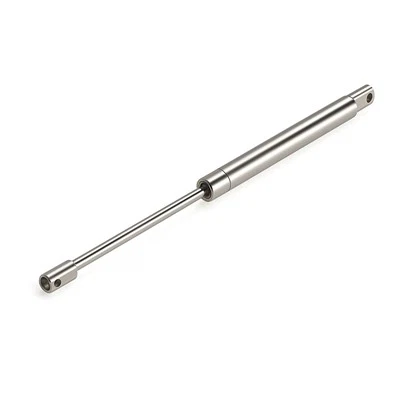
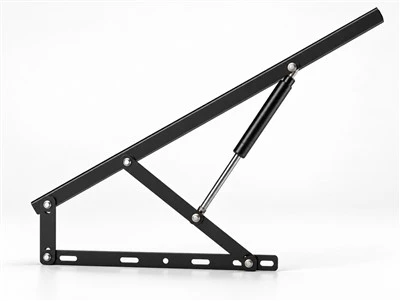
If you've ever opened a heavy toolbox that slams shut if you're even a millisecond late, or struggled to hold up a tall cabinet door while tightening hinges, you know how a compression gas spring can make (or break) a design. As a supplier who works with manufacturers every day, I've seen first-hand how cheap, off-the-shelf gas springs turn small headaches into big problems-leaking prematurely, applying uneven force, or failing when you need them most. High-quality compression gas springs aren't just "springs with gas"; they're precision-engineered parts that solve real pain points, and there are a few key features that set them apart from the rest.
First, let's cut through the jargon: compression gas springs work by storing pressurized nitrogen gas inside a sealed steel cylinder, with a piston rod that extends or retracts based on applied force. Low-quality skimp on two core parts: the seal and the gas charge. Cheap seals wear out fast, letting nitrogen escape over months instead of years. I've had customers come to us after their first batch of springs lost 30% of their force in 6 months-enough to make a hospital bed tilt unevenly or a commercial oven door drop suddenly. Top-tier springs use multi-layered, precision-machined seals, usually a mix of PTFE and nitrile rubber, that create a near-zero-leak barrier. We test our seals in-house by pressurizing them to 200 bar (that's way higher than most applications need) and leaving them for 12 months-if they lose more than 5% of pressure, they get scrapped. That's non-negotiable for us, because we know downtime for our customers costs way more than a slightly more expensive spring.
Next is consistent force output. Ever used two springs for the same application, and one feels way stiffer than the other? That's a sign of inconsistent manufacturing, usually from variations in gas fill or cylinder wall thickness. High-quality compression gas springs are calibrated to within ±5% of their listed force, even for custom orders. For example, a 500N spring should push with almost exactly 500N, not 450N or 550N. Why does that matter? Take a soft-close cabinet: if one spring is 10N weaker than the other, the door will tilt to one side instead of closing smoothly, leading to uneven gaps or even damage. We have a whole line for this, including our [Soft-Close Compression Gas Struts Damped Motion Control] that's built specifically for applications where gentle, even movement is non-negotiable. We dial in the damping force alongside the compression force, so the final product moves exactly like it's supposed to-no jerks, no lopsided motion.
Speaking of damping, that's another make-or-break feature a lot of buyers overlook. Damping is the controlled resistance that slows the spring's motion, right? It's what keeps a heavy tailgate from slamming down on your hands, or a computer desk lift from dropping a monitor. Low-quality springs have generic damping that works only at a specific speed-too fast, and it doesn't slow down; too slow, and it feels like pushing through molasses. High-quality damping uses precisely sized orifices in the piston, so the resistance adjusts smoothly with the speed of movement. Even if someone slams a drawer shut, our springs don't jolt-they decelerate gradually. We also offer [Inter-Stop Gas Springs Position Hold] for applications where you need the spring to lock at specific points, like a drafting table or a medical equipment arm. Those use a small, built-in locking mechanism that engages easily and holds tight-no slipping mid-use, even with repeated heavy loads.
Durability for heavy-use or extreme environments is another key. If your application is for a forklift, a truck bed, or a food processing machine (which gets cleaned with high-pressure hoses and harsh chemicals), standard springs won't hold up. High-quality compression gas springs are built with corrosion-resistant materials-usually zinc-plated or stainless steel cylinders, depending on the environment. We have a [Compression Gas Springs Heavy Duty Adjustable Force 100–1200N] line that's tested for up to 20,000 full cycles, even at temperatures ranging from -40°F to 180°F. We once had a food equipment manufacturer test our heavy-duty springs against a competitor's: after 10,000 cycles, the competitor's springs were leaking 25% of their gas, while ours were still within 2% of their rated force. That kind of longevity isn't luck-it's from using thicker cylinder walls (we go with 2mm steel instead of 1.5mm) and heat-treated piston rods that resist bending or scoring, even when paired with heavy loads.
Adjustability is a bonus that separates good springs from great ones, especially for prototype or custom applications. A lot of manufacturers don't want to keep ordering different spring sizes to get the right force-they want one spring they can tweak to fit. High-quality adjustable compression gas springs let you adjust the force by ±10% without needing to replace the whole unit. We adjust ours by changing the gas charge slightly (a precise, factory-only process) so you don't have to deal with messy, user-adjustable valves that can leak if not sealed right. That's a big win for small-batch manufacturers who don't want to hold a bunch of extra inventory.
Wait, let's talk about a common mistake buyers make: picking a spring based only on rated force, not the application's dynamic vs. static force. Static force is the weight you're holding at rest, but dynamic force is the extra force needed to move it. Cheap springs are often rated for static force, so when you try to open a lid, the spring doesn't have enough dynamic force to push it up fast enough, leaving you holding the lid. Top-tier manufacturers, including us, list both static and dynamic force (usually the dynamic is 10–15% higher than static) so you pick the right one for the job. I can't count how many times we've had customers come back saying their spring is "too weak" only to realize they ordered a static-rated spring instead of dynamic, or they didn't account for the friction in their application (like hinges or sliders that add resistance).
Another hidden feature: tolerance for misalignment. No installation is perfect-sometimes a bracket is drilled a little off, or a rod is slightly bent. Low-quality springs bind up and wear out fast if there's even a few degrees of misalignment. High-quality compression gas springs have a floating piston rod or rod eye mounts that can compensate for minor misalignment, so the spring operates smoothly even with small installation errors. That saves our customers a lot of time on assembly, because they don't have to precision drill every hole to within a millimeter.
So why does all this matter? For our customers, a bad spring means bad reviews, warranty claims, or product recalls. For example, a manufacturer of outdoor storage sheds once switched to cheap springs, and within a year, 20% of their springs were leaking, leading to doors that wouldn't stay open. They had to issue a recall, which cost them way more than switching to high-quality springs would have. We've built our business on helping customers avoid that kind of headache-whether it's a custom spring for a one-off prototype or a bulk order for 10,000 cabinet doors, we test every spring to make sure it meets our standards.
If you're in the market for compression gas springs, don't just go for the lowest price. Look for multi-layer seals, consistent force tolerance, precision damping, and durable materials. If you need help figuring out which spring is right for your application, or you have a custom request, feel free to reach out to our team to discuss your needs. We're here to make sure your products work as intended, no surprises.


References
- Gas Spring Technology Association. (2022). "Performance Standards for Compression Gas Springs." Industrial Hardware Journal, 45(3), 112–118.
- International Organization for Standardization. (2019). "ISO 12225:2019 - Gas Springs for Industrial Applications." ISO Press.
- Smith, J. (2021). "Leakage Resistance in Pneumatic Spring Seals." Journal of Mechanical Design, 143(7), 071703.