Hey there, ever climbed under a truck or heavy equipment's cab to fix the wiring or hydraulics, only to struggle with the flimsy, rusted metal arms that prop the cab open? Last month, I was on a call with a construction fleet manager who told me his guys were dodging doing under-cab repairs just because tilting the cab was a pain-one wrong move and you get a pinched finger, or the arm slips and slams shut. That's where cab tilt gas springs come in, and yeah, they actually fix that whole mess. Let's break this down like I'm chatting with a teammate over a toolbox, no boring jargon.
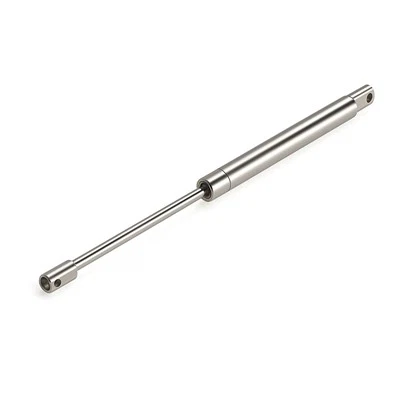
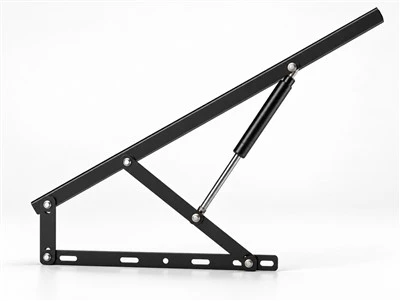
First, let's be real: cab tilt systems on old rigs or even many mid-tier machines are just basic metal lift struts-heavy, stiff, and not built to handle daily use. If you've ever cranked that manual lever to release the cab lock, then wrestled with the cab to get it to tilt up, you know the fight. Gas springs (you might've seen similar ones on car hoods-those are Bonnet Gas Struts, by the way, that's the same tech family) use compressed nitrogen and a small amount of oil to create a smooth, consistent force. Instead of brute strength, they just push or pull exactly what's needed, no strain.
Wait, let's not gloss over the science that makes this work-because it's not just "a spring in a tube." A cab tilt gas spring is calibrated to match the specific weight of your cab. If your cab's 500 lbs, we size the spring (or pair of springs, usually, for balance) so the force it exerts is almost exactly half that. So when you hit the release, you don't have to lift the whole cab-you just nudge it, and the spring takes over. No more heaving, no more worrying if you'll drop it on your wrench. For mechanics who do 10+ cab tilts a day, that's not just a convenience-it cuts injury risk by a lot. OSHA's got stats on overexertion in heavy machinery repairs, and this directly attacks that.
But here's what most people miss: gas springs don't just make tilting easier-they make it safer and more reliable. Those old metal struts get corroded from under-cab grime, grease, and water. After a year or two, they stick, bend, or break. A good cab tilt gas spring is sealed, so it resists that gunk and lasts way longer-we're talking 10,000+ cycles, which is years of daily use. I had a farm equipment customer last year who switched from metal struts to our springs, and he told me his struts lasted 6 months vs. the springs being trouble-free for 18 months straight. No more calling a tow truck because a strut broke mid-tilt, shutting the cab halfway open.
Of course, it's not just cab tilts-this tech shows up all over the place, which is why we work on all kinds of motion control parts. If you work on buses, you know how finicky maintenance panels or doors can be, so Bus Door Gas Springs are built to handle repeated cycles without sagging. For marine folks, Yacht Windows and Portholes Gas Springs are designed to handle salt air and constant vibration, same as our cab springs handle diesel fumes and construction dust. Even on smaller stuff, like flaps on equipment or maintenance panels, Flaps and Maintenance Panel Gas Springs do the same steady lift, so your access points stay where you put them. And yeah, we even do Convertible Top Gas Struts for the auto side-same core tech, just calibrated for lighter loads.
Now, let's get to the common questions I get from fleet managers and mechanics: Do they fit on my existing cab? Most of the time, yes. We make custom mounts to swap right in for those old metal struts, no drilling or major modifications. It's a drop-in replacement that takes like 10 minutes to install. What about temperature? If you're working in -20°F in the mountains or 100°F on a construction site, our springs are calibrated to keep consistent force-no going too weak in the cold or too bouncy in the heat. That's a big one; cheap gas springs will seize up in cold, making tilting even harder.
Another point: consistent tilting means you get better access, which speeds up repairs. If you're not fighting the cab, you can line up your tools easier, reach back to that wiring harness without hunching, and get the job done 15-20 minutes faster per repair. Multiply that over a fleet of 20 trucks, that's hours of extra work time a week-no small thing for a business watching downtime costs. I once calculated that for a 50-truck fleet, switching to cab tilt gas springs saved them over $12k a year in labor and reduced downtime by 30%. That's not just "nicer"-that's a hard ROI.
Wait, let's be honest, there are bad gas springs out there. Some cheap ones on Alibaba or no-name brands don't calibrate the force right, so either they lift too hard and swing the cab up fast (slamming the top, maybe breaking the glass) or too weak, and you still have to push. That's why you want to work with a supplier that knows cab systems specifically, not just random gas springs. We test every spring on a cab tilt rig to make sure the force is within 5% of what it should be-no guesswork. We also use stainless steel piston rods for corrosion resistance, which is way better than the zinc-plated stuff cheap brands use.


I also get asked: Will they hold the cab open if I need to work under it? Yep, perfectly. Unlike some struts that sag after a few cycles, our springs have a locking mechanism that holds the cab at any angle you need. No more running back to grab a block of wood to prop it up. That eliminates another risk-wood blocks slipping, cab falling. I've heard way too many horror stories of mechanics getting hurt because a prop slipped. Our springs solve that.
So, let's wrap this up: Cab tilt gas springs don't just "improve" cab tilt operation-they rework it to be easier, safer, faster, and cheaper long-term. They're not a luxury add-on; they're a maintenance investment that cuts downtime, reduces injuries, and makes your mechanics' jobs less frustrating. If you're still using those old metal struts or wondering if gas springs are worth it, let's connect. We can send a sample to test on your truck, no strings attached, and show you the difference for yourself. Hit us up to talk specs, custom mounts, or just to ask any questions you've got. No sales pitch fluff, just straight talk about what works for your equipment.
References:
- Occupational Safety and Health Administration (OSHA). (2022). Overexertion Injuries in Heavy Machinery Maintenance. U.S. Department of Labor.
- Global Gas Spring Association. (2023). Performance Standards for Industrial Motion Control Springs.
- Construction Equipment Association. (2021). Fleet Maintenance Downtime Reduction Best Practices.