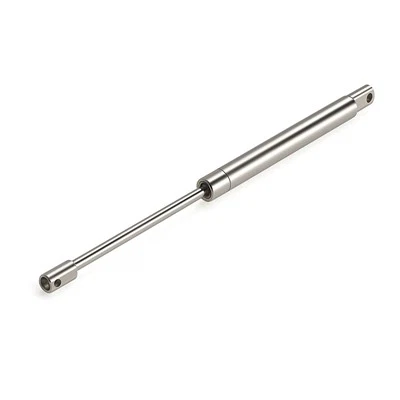
Hey there! As a supplier of traction gas springs, I often get asked about the standard diameter of these nifty little devices. So, I thought I'd sit down and write a blog post to clear up some of the confusion.
First off, let's talk about what traction gas springs are. In simple terms, they're mechanical components that use compressed gas to provide a pulling force. They're used in a wide range of applications, from automotive to industrial, and even in some consumer products. They're great because they can provide a smooth and consistent pulling force, which is really useful in a lot of situations.
Now, onto the main question: what's the standard diameter of a traction gas spring? Well, the truth is, there isn't a one - size - fits - all answer. The diameter of a traction gas spring can vary depending on a few different factors.
One of the biggest factors is the load capacity. If you need a gas spring to handle a heavy load, you'll typically need a larger diameter. This is because a larger diameter can contain more compressed gas, which in turn can generate a greater pulling force. For example, if you're using a traction gas spring in a heavy - duty industrial application where you need to lift or pull a large amount of weight, you might be looking at a diameter of 25mm or more. On the other hand, for lighter applications like in some small consumer electronics or household items, a diameter of 10mm or 12mm could be sufficient.
Another factor that affects the diameter is the stroke length. The stroke length is the distance that the gas spring can extend or retract. Longer stroke lengths often require larger diameters. This is because a longer stroke means that the gas has to travel a greater distance, and a larger diameter provides more space for the gas to move and maintain pressure.
The environment in which the gas spring will be used also plays a role. If the gas spring is going to be exposed to harsh conditions, such as high temperatures, corrosive chemicals, or a lot of dust, you might need a larger diameter to ensure durability. A larger diameter can allow for thicker walls, which can better withstand these tough conditions.
Let's take a look at some common diameters that you'll come across in the market. In general, diameters can range from as small as 6mm to as large as 50mm. The most commonly used diameters are in the range of 10mm - 25mm. These sizes offer a good balance between load capacity, stroke length, and cost.
If you're in the market for a traction gas spring, you might be interested in some of the specific types we offer. We have 316 Stainless Tension Gas Springs. These are made from 316 stainless steel, which is highly resistant to corrosion. They're great for applications where the gas spring will be exposed to moisture or chemicals. The diameter options for these gas springs are quite diverse, so you can choose the one that best suits your needs.
We also have Adjustable Tension Gas Springs Pull Type. These are really cool because you can adjust the pulling force according to your requirements. You can fine - tune the tension to get the perfect performance for your application. Again, we offer a variety of diameters for these adjustable gas springs.
When you're choosing the diameter of a traction gas spring, it's important to do your research. You need to consider the load you'll be dealing with, the stroke length, and the environment. It's also a good idea to consult with an expert. As a supplier, we're always here to help you make the right choice. We've got a team of experienced professionals who can answer all your questions and guide you through the selection process.
If you're still not sure which diameter is right for you, don't worry. You can always start by looking at the specifications of similar applications. Check out what others in your industry are using. You can also look at the product manuals and technical data sheets of the gas springs. These will give you a good idea of the capabilities of different diameters.
Once you've narrowed down your options, it's a good idea to test the gas spring if possible. You can request a sample from us, and see how it performs in your actual application. This hands - on approach can really help you make the best decision.
In conclusion, the standard diameter of a traction gas spring isn't set in stone. It depends on a variety of factors, and there's a wide range of diameters available to meet different needs. Whether you're working on a small - scale project or a large - scale industrial application, there's a traction gas spring out there for you.
If you're interested in purchasing traction gas springs, we'd love to hear from you. We can provide you with high - quality products at competitive prices. Just reach out to us, and we'll start the conversation about your specific requirements. We're committed to providing excellent customer service and ensuring that you get the right gas spring for your job.
References:


- Engineering Handbook of Gas Springs
- Industrial Application Guides for Traction Gas Springs
So, don't hesitate to get in touch if you have any questions or if you're ready to start your purchase. We're looking forward to working with you!